
Choosing the right outfit for a job interview can feel challenging, especially when you want to look professional, confident, and comfortable at the same time. Your clothing is an important part of your overall presentation, and the right outfit can help you feel prepared before walking into the interview room.
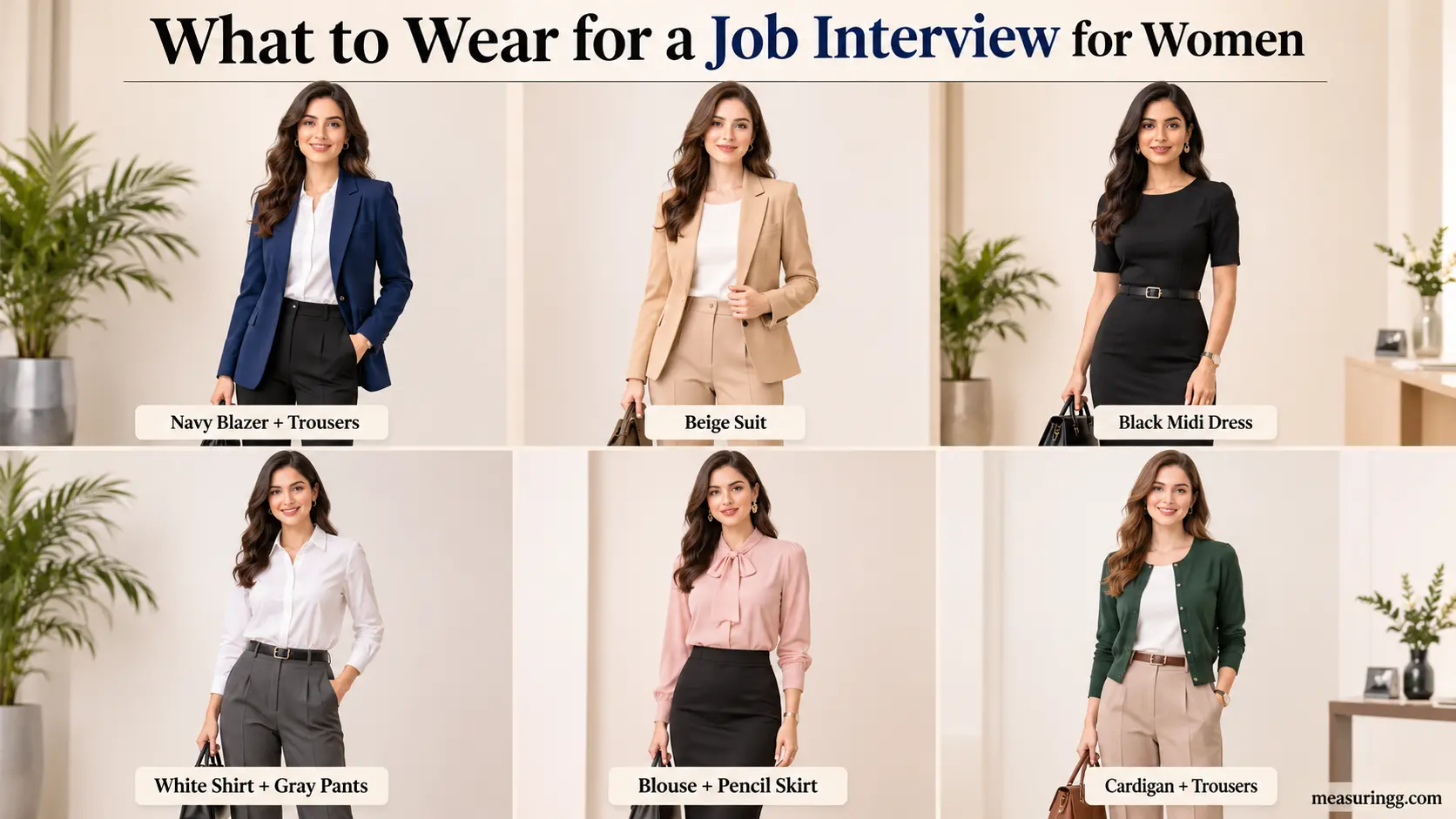
If you are wondering what to wear for a job interview for women, the best approach is to choose clean, well-fitted, professional clothing that matches the company’s work environment. Whether you are interviewing for a corporate position, a creative role, an office job, or a remote position, your outfit should reflect the workplace’s dress expectations while allowing you to feel comfortable and confident.
You do not necessarily need an expensive designer wardrobe to dress professionally. A simple blazer, tailored trousers, a classic blouse, a modest dress, or a comfortable pair of professional shoes can create an excellent interview outfit.
In this guide, you will discover professional interview outfit ideas, clothing combinations for different industries, seasonal styling tips, footwear recommendations, and common mistakes to avoid.
1. What Should Women Wear to a Job Interview?
The ideal job interview outfit depends on the position, company culture, and industry. However, some clothing choices work well in many professional settings.
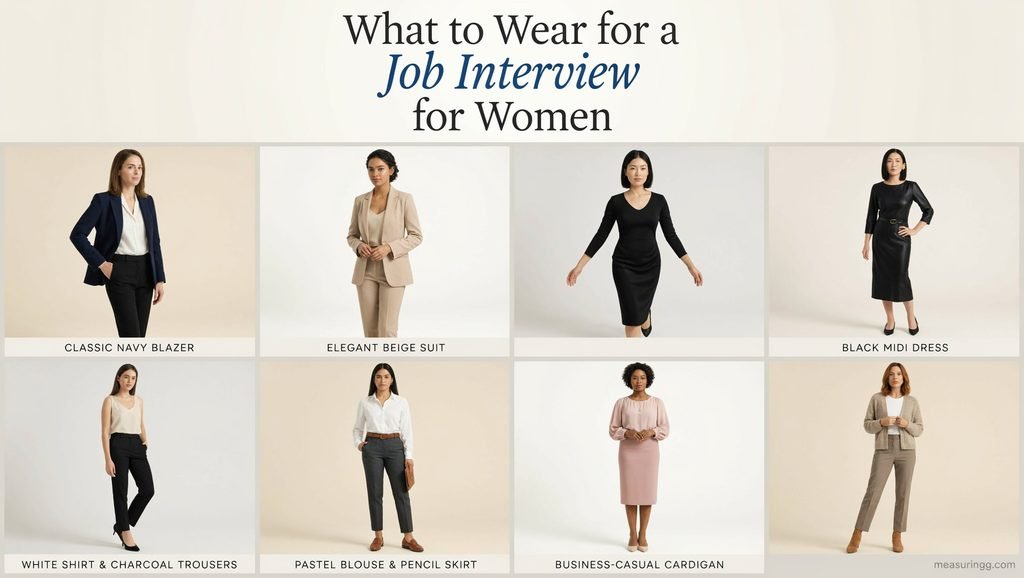
Here are some reliable options:
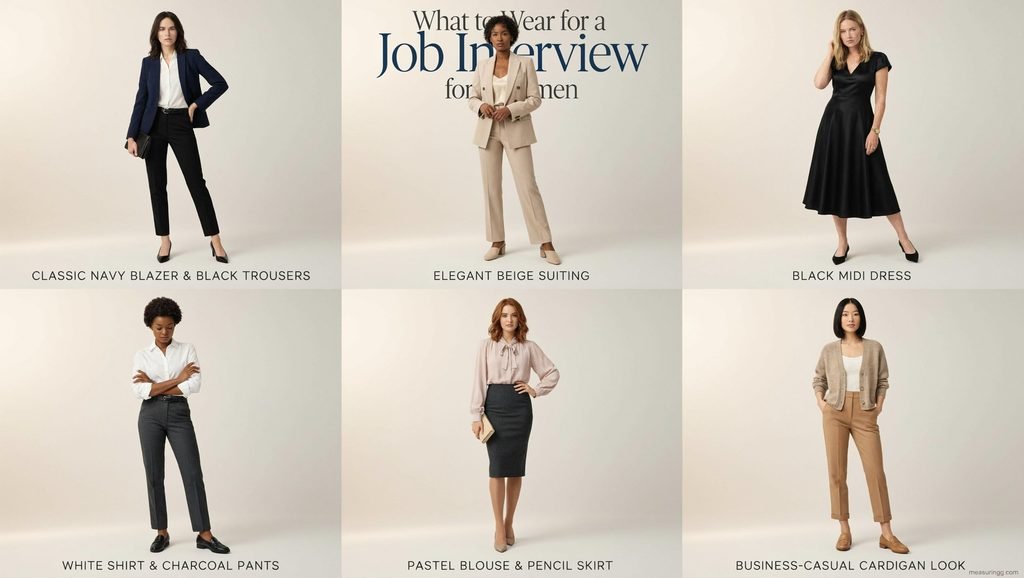
- A tailored blazer with dress pants.
- A button-down shirt with formal trousers.
- A knee-length or midi professional dress.
- A neutral-colored blouse with a pencil skirt.
- A matching pantsuit.
- A cardigan with tailored trousers for a business-casual workplace.
When choosing your outfit, consider the company’s dress code. A financial institution or law firm may expect formal business clothing, while a technology startup or creative agency may have a more relaxed dress culture.
If you are unsure about the dress code, dressing slightly more formally than the everyday workplace standard is often a sensible choice.
2. Best Job Interview Outfit Ideas for Women
You can create a professional appearance with several simple clothing combinations. The following outfit ideas can help you choose something suitable for your next interview.
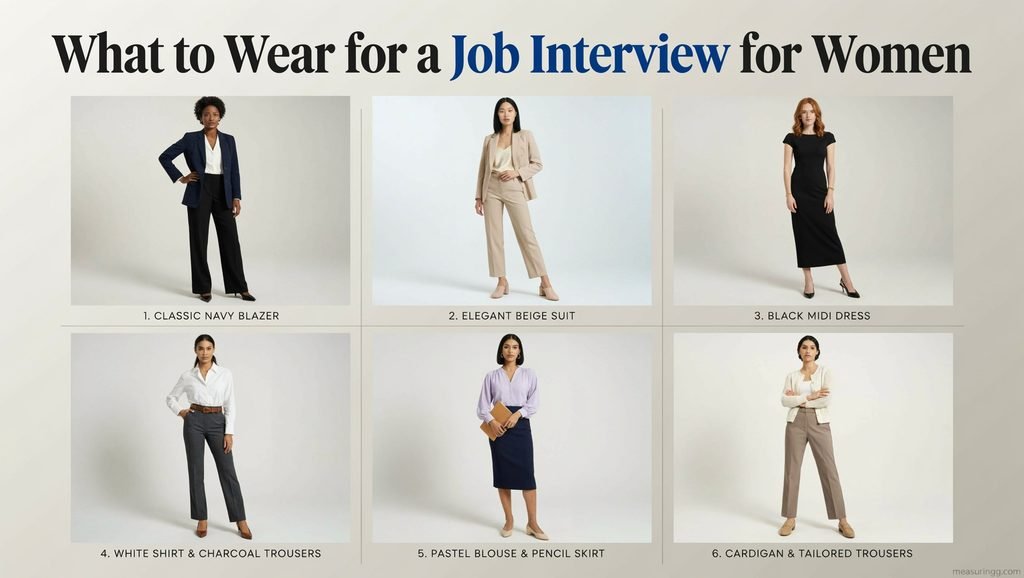
1. Classic Blazer and Dress Pants
A blazer paired with tailored dress pants is one of the most reliable interview outfit combinations.
Choose a black, navy, gray, or beige blazer and combine it with matching or complementary trousers. Underneath, wear a simple blouse or button-down shirt.
This outfit works particularly well for corporate interviews, administrative positions, banking jobs, and management roles.
Complete the look with closed-toe flats, loafers, or low heels.
2. White Button-Down Shirt and Black Trousers
A white button-down shirt and black trousers create a clean and professional appearance without requiring complicated styling.
Choose a shirt that fits comfortably and trousers that allow you to sit and move easily.
You can add a slim belt and simple accessories to complete the outfit.
This combination is suitable for office interviews, customer service roles, teaching positions, and many entry-level jobs.
3. Professional Midi Dress
A midi dress can be an excellent choice if you prefer wearing dresses instead of trousers.
Look for a simple design with a comfortable fit, modest neckline, and professional length. Neutral shades such as navy, black, gray, and muted green are versatile options.
For a more structured appearance, add a lightweight blazer.
Avoid overly decorative designs, distracting patterns, or uncomfortable fabrics that require constant adjustment.
4. Matching Pantsuit
A matching pantsuit creates a coordinated and polished appearance.
You can choose a traditional black or navy suit or experiment with softer neutral colors such as taupe, beige, and charcoal.
Wear a simple blouse underneath and choose professional shoes that complement the outfit.
This option is especially suitable for senior-level interviews, corporate positions, consulting roles, and formal business environments.
5. Blouse and Pencil Skirt
A blouse paired with a knee-length or midi pencil skirt is another professional combination.
Choose a blouse with a simple design and a skirt that allows comfortable movement.
Neutral colors are easy to coordinate, but subtle colors can also work well.
Complete the outfit with closed-toe flats or low heels.
6. Cardigan and Tailored Trousers
For a business-casual interview, a neat cardigan can replace a traditional blazer.
Choose a structured cardigan in a neutral shade and pair it with tailored trousers and a simple top.
This outfit is particularly useful for interviews at smaller companies, educational institutions, and workplaces with relaxed professional dress codes.
7. Neutral Blouse and Wide-Leg Trousers
Wide-leg trousers can look professional when paired with a structured blouse.
Choose trousers with a clean finish and a length that works with your shoes.
A tucked-in blouse can create a coordinated appearance without making the outfit overly formal.
This combination works well for creative offices, administrative positions, and business-casual environments.
3. What Colors Are Best for a Job Interview?
Color can influence the overall impression of your interview outfit. While there is no universal rule about which color women must wear to interviews, some shades are particularly easy to style in professional settings.
Navy Blue
Navy is a versatile professional color that works well for blazers, trousers, skirts, and dresses.
It pairs easily with white, cream, light blue, and gray.
Black
Black is a classic option for formal interview outfits.
A black blazer, tailored trousers, or simple dress can create a professional appearance. You can balance darker clothing with a lighter blouse.
Gray
Gray offers a professional alternative to black and navy.
Charcoal and medium gray work particularly well for suits, trousers, and structured skirts.
White and Cream
White and cream are excellent choices for shirts, blouses, and simple tops.
They pair well with darker trousers and blazers.
Beige and Taupe
Beige and taupe can create a sophisticated business-casual appearance.
These shades are especially useful when you want something different from traditional dark interview clothing.
Soft Blue
Light blue is a versatile option for shirts and blouses.
It pairs nicely with navy, gray, black, and beige.
Color tip: You do not need to wear only black, white, or gray to look professional. Subtle colors and simple patterns can also be appropriate when they suit the workplace.
4. What to Wear for Different Types of Job Interviews
Different industries have different expectations. Understanding the company’s environment can help you select an appropriate outfit.
Corporate and Banking Interviews
Corporate workplaces often have more formal dress expectations.
Recommended outfits include:
- A matching pantsuit.
- A blazer with tailored trousers.
- A formal blouse with a pencil skirt.
- A structured professional dress.
Choose simple accessories and polished footwear.
Office and Administrative Interviews
Office and administrative positions generally call for business-professional or business-casual clothing.
Consider wearing:
- A button-down shirt with dress pants.
- A cardigan with tailored trousers.
- A simple midi dress.
- A blazer with a neutral blouse.
Choose clothing that looks organized and feels comfortable throughout the interview.
Teaching Job Interviews
For teaching positions, choose an outfit that looks professional while allowing you to move comfortably.
A midi dress, tailored trousers with a blouse, or a cardigan with a professional skirt can work well.
Avoid clothing that makes sitting, walking, or moving around difficult.
Creative Industry Interviews
Creative workplaces may have more flexible dress codes.
You can choose:
- Wide-leg trousers with a stylish blouse.
- A simple dress with a structured jacket.
- Tailored pants with a subtle patterned shirt.
- A coordinated business-casual outfit.
You can express some personal style through color and accessories while keeping the overall outfit professional.
Healthcare Job Interviews
For healthcare administration, clinic reception, and other non-clinical interviews, professional clothing is usually appropriate.
A simple blouse with trousers, a modest dress, or a blazer combination can work well.
For clinical positions, check whether the employer has specific clothing or uniform requirements for interviews.
Retail and Customer Service Interviews
For retail and customer service roles, a neat business-casual outfit is often suitable.
Try dark trousers, a simple blouse, and clean flats or loafers.
If the company has a recognizable style, you can consider dressing in a way that reflects its workplace environment without wearing an actual uniform unless requested.
5. What to Wear for a Job Interview in Summer
Hot weather can make professional dressing more challenging. The goal is to choose breathable fabrics and comfortable clothing while maintaining an appropriate interview appearance.
Consider these summer outfit ideas:
Lightweight Blouse and Dress Pants
Choose a breathable blouse made from cotton or another comfortable fabric.
Pair it with tailored trousers in a neutral shade.
Short-Sleeve Professional Dress
A simple short-sleeve midi dress can be appropriate for many office environments.
Choose a structured design that is comfortable and easy to move in.
Lightweight Blazer and Trousers
If the workplace expects formal business clothing, wear a lightweight blazer with matching trousers.
You can remove the blazer when appropriate, but keep your complete interview outfit professional.
Breathable Fabrics for Summer
Some useful fabric choices include:
- Cotton.
- Linen blends.
- Lightweight wool.
- Breathable viscose blends.
- Lightweight structured fabrics.
Avoid fabrics that wrinkle excessively or become uncomfortable after a short time.
6. What to Wear for a Job Interview in Winter
Winter interviews require clothing that looks professional while providing enough warmth.
Here are some practical combinations:
Blazer with a Warm Layer
Wear a blazer over a lightweight sweater or blouse.
Choose colors such as navy, charcoal, black, or beige.
Tailored Trousers with a Sweater
A simple fine-knit sweater paired with dress pants can work well for business-casual interviews.
Professional Coat
If you need an outer layer, choose a clean, structured coat that complements your outfit.
Remove your coat before the interview begins when appropriate.
Winter Footwear
Choose clean, comfortable shoes that work with your outfit and the weather.
If it is snowy or rainy, you can travel in weather-appropriate footwear and change into professional shoes before the interview.
7. What Shoes Should Women Wear to a Job Interview?
Shoes are an important part of a professional outfit. They should be clean, comfortable, and appropriate for the workplace.
Here are some suitable options.
Closed-Toe Flats
Professional flats are a practical option for women who do not prefer heels.
They work well with trousers, dresses, and skirts.
Loafers
Loafers are a versatile choice for business-casual and formal office outfits.
Black, brown, beige, and navy options are easy to coordinate.
Low Heels
Low heels can complement formal dresses, skirts, and pantsuits.
Choose a pair that feels stable and comfortable.
Classic Pumps
Traditional pumps can work well in formal business environments.
Choose a simple design rather than heavily decorated footwear.
Professional Ankle Boots
Ankle boots may be suitable for winter interviews, especially in business-casual workplaces.
Choose clean, understated designs that complement your clothing.
Avoid: Dirty shoes, uncomfortable footwear, noisy accessories, and shoes that make walking difficult.
8. What Accessories Should Women Wear to a Job Interview?
Accessories can complete an interview outfit, but they should not distract from your professional presentation.
Consider these options:
- A simple wristwatch.
- Small earrings.
- A delicate necklace.
- A structured handbag.
- A professional belt.
- A neat portfolio or document folder.
You do not need to wear every accessory at once.
Choose a few items that complement your outfit.
For example, a navy blazer, white blouse, black trousers, simple earrings, and a structured handbag create a coordinated appearance without requiring elaborate accessories.
9. What Should Women Avoid Wearing to a Job Interview?
Although workplace dress codes vary, some clothing choices may be less appropriate for traditional professional interviews.
Here are some things to consider avoiding:
1. Extremely Casual Clothing
Avoid pajamas, overly casual loungewear, and clothing that looks unsuitable for the workplace.
2. Wrinkled Clothing
Wrinkled shirts, trousers, and dresses can make an outfit look unfinished.
Prepare your clothing in advance and check it before leaving.
3. Clothing That Requires Constant Adjustment
Choose an outfit that stays comfortable when sitting, standing, and walking.
You should not need to adjust your clothing repeatedly during the interview.
4. Excessively Distracting Accessories
Large or noisy accessories may distract from the conversation.
Choose simple pieces that complement your outfit.
5. Uncomfortable Shoes
Avoid wearing shoes that make it difficult to walk or stand comfortably.
Your footwear should support you throughout the interview.
6. Overpowering Fragrance
Strong perfume may be uncomfortable in a small interview room.
If you choose to wear fragrance, keep it subtle.
7. Clothing That Does Not Match the Workplace
A very formal outfit may feel out of place in a relaxed creative workplace, while an extremely casual outfit may not meet expectations in a traditional corporate environment.
Research the company before choosing your clothing.
10. What to Wear for a Job Interview When You Have No Experience
If this is your first job interview, you may not have a professional wardrobe yet. Fortunately, you can create an appropriate outfit using basic clothing items.
Here are some easy combinations:
Option 1: Simple and Professional
- White button-down shirt.
- Black or navy trousers.
- Clean flats.
- Simple handbag.
Option 2: Business Casual
- Neutral blouse.
- Tailored trousers.
- Cardigan.
- Comfortable loafers.
Option 3: Formal and Classic
- Simple professional dress.
- Structured blazer.
- Closed-toe shoes.
- Minimal accessories.
You do not need to purchase a complete new wardrobe for your first interview. Focus on clean, coordinated, comfortable clothing that suits the position.
11. What to Wear for a Virtual Job Interview
Virtual interviews have become common, and choosing the right clothing is still important.
Even though the interviewer may only see your upper body, you should prepare your outfit carefully.
Choose a Professional Top
A blouse, button-down shirt, or simple sweater can work well.
Choose a color that looks clear on camera and does not blend into your background.
Avoid Distracting Patterns
Very busy patterns can sometimes appear distracting on video.
Simple colors and subtle designs are usually easier to coordinate.
Consider Your Background
Choose clothing that contrasts appropriately with your background.
For example, if you are sitting in front of a white wall, a navy or darker-colored top may be easier to distinguish.
Dress Completely
It is sensible to wear a complete professional outfit rather than only dressing for the camera.
This can help you feel prepared and avoid unexpected situations.
Check Your Appearance Before the Call
Before joining the interview:
- Check your camera angle.
- Make sure your clothing looks neat.
- Adjust your lighting.
- Test your audio.
- Keep your interview notes nearby.
12. How to Choose the Right Job Interview Outfit
If you are still unsure about what to wear for a job interview for women, use these simple steps.
Step 1: Research the Company
Visit the company’s website and social media profiles.
Look at workplace photographs to understand whether the environment appears formal, business-casual, or relaxed.
Step 2: Understand the Job Position
A senior management position may require more formal clothing than an entry-level creative role.
Think about the responsibilities and environment of the position.
Step 3: Check the Weather
Consider the temperature and weather conditions on the interview day.
Choose appropriate layers and comfortable fabrics.
Step 4: Select Comfortable Clothing
Make sure your outfit allows you to sit, walk, and move comfortably.
Try it on before the interview day.
Step 5: Prepare Everything in Advance
Select your clothing, shoes, handbag, and accessories the night before.
This can help reduce last-minute stress.
Step 6: Check the Complete Outfit
Look at the outfit together rather than evaluating each item separately.
Make sure the colors, fabrics, and accessories work well together.
13. Job Interview Outfit Checklist for Women
Use this checklist before leaving for your interview.
- Clothes are clean and wrinkle-free.
- Outfit matches the workplace dress code.
- Shoes are clean and comfortable.
- Accessories are simple and appropriate.
- Hair is neat and comfortable.
- Bag contains necessary documents.
- Outfit is suitable for the weather.
- Clothing allows comfortable movement.
- Phone and interview documents are ready.
Preparing these details in advance can help you focus on the interview instead of worrying about your appearance.
14. Frequently Asked Questions
Q1. What is the best outfit for a job interview for women?
A blazer with tailored trousers, a professional dress, or a blouse with dress pants are reliable options. The best choice depends on the company’s dress code and the position you are applying for.
Q2. Can women wear jeans to a job interview?
Jeans may be acceptable for interviews at some casual workplaces, but they are generally not the safest choice for traditional corporate interviews. If you are unsure, choose tailored trousers instead.
Q3. Is it okay to wear black to a job interview?
Yes. Black is a classic professional color. You can wear black trousers, a blazer, or a simple dress and combine them with a lighter-colored blouse.
Q4. Can women wear dresses to job interviews?
Yes. A simple professional dress can be an excellent interview outfit. Choose a comfortable design with a suitable length and neckline.
Q5. Are heels necessary for a job interview?
No. Heels are not necessary. Professional flats, loafers, and other comfortable closed-toe shoes can look equally appropriate.
Q6. What should women wear to a job interview in summer?
Lightweight blouses, breathable trousers, simple dresses, and lightweight blazers are useful summer options. Choose comfortable fabrics suitable for warm weather.
Q7. What should women wear to a job interview in winter?
Consider tailored trousers, warm professional tops, blazers, fine-knit sweaters, and structured coats. Choose layers that provide warmth without making the outfit uncomfortable.
Q8. Should women wear makeup to a job interview?
Makeup is optional. You do not need to wear makeup to look professional. Choose whatever grooming routine makes you feel comfortable and prepared.
Q9. Can women wear sneakers to a job interview?
Some creative and casual workplaces may accept clean, understated sneakers. However, professional flats or loafers are generally a safer choice when you are unsure about the dress code.
Q10. What should I wear to my first job interview?
A simple blouse with tailored trousers, a modest professional dress, or a blazer with dress pants can work well. Choose clothing you already own if it is clean, comfortable, and appropriate.
Q11. What colors should women avoid wearing to interviews?
There is no universal list of forbidden colors. However, extremely distracting combinations or patterns may not be suitable for some professional environments. Choose colors that complement the workplace and your outfit.
Q12. How early should I prepare my interview outfit?
Preparing your outfit the evening before is a practical approach. It gives you time to check the clothing, shoes, accessories, and weather suitability.
Conclusion
Choosing what to wear for a job interview for women does not have to be complicated. The best interview outfit is one that matches the company’s dress code, feels comfortable, and allows you to focus on presenting your qualifications.
A classic blazer, tailored trousers, a professional blouse, a simple midi dress, or a coordinated pantsuit can all be excellent choices.
Before your interview, research the company, check the weather, prepare your outfit, and make sure everything is comfortable and neat.
Remember, your clothing is only one part of your interview preparation. Your skills, experience, communication, and ability to explain why you are right for the position matter much more.
Choose an outfit that helps you feel prepared, and focus on showing the interviewer what you can bring to the role.