
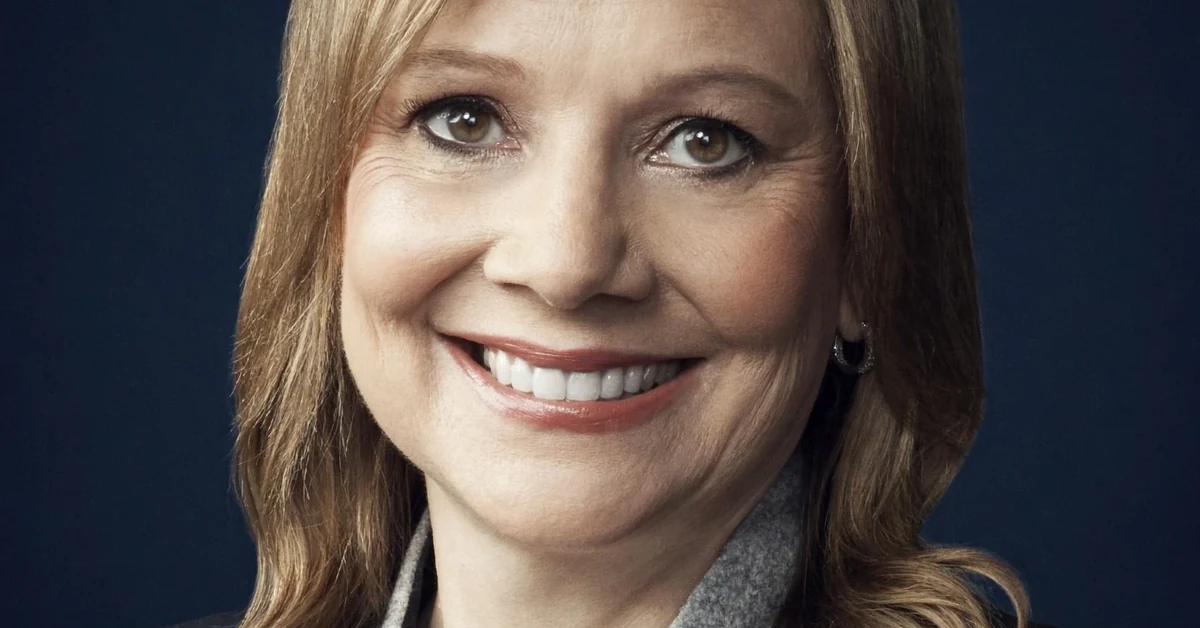
Mary Barra and David Cordani sit atop two of the most recognizable companies in America — General Motors and The Cigna Group. Both are career corporate executives who climbed from entry-level jobs to the very top of their industries. Barra, the chair and CEO of GM, is known as the first woman to lead a Big Three automaker, while Cordani spent 17 years as Cigna’s CEO before becoming executive chair in July 2026. Their main source of income is executive compensation, the multi-million-dollar pay packages that come with running companies of this size.
This comparison biography breaks down how two very different careers arrived at remarkably similar destinations. Barra built her entire working life inside one car company, starting as a teenage co-op student and reaching the corner office 34 years later. Cordani entered healthcare finance in 1991 and steadily rose through Cigna’s ranks, ultimately reshaping it into a global health-services giant. What can their parallel journeys teach us about corporate leadership, career patience, and the price of running a modern corporation?
| Detail | Mary Barra | David Cordani |
|---|---|---|
| Full Name | Mary Teresa Barra (née Mäkelä) | David M. Cordani |
| Born | December 24, 1961, Royal Oak, Michigan | February 10, 1966, Waterbury, Connecticut |
| Age (2026) | 64 | 60 |
| Company | General Motors | The Cigna Group |
| Current Role | Chair and CEO | Executive Chair |
| CEO Tenure | Since January 2014 | 2009 – July 1, 2026 |
| Industry | Automotive | Healthcare / Health Services |
| Undergraduate Degree | B.S., Electrical Engineering, Kettering University (1985) | B.A., Accounting, Texas A&M University (1988) |
| Graduate Degree | MBA, Stanford Graduate School of Business (1990) | MBA, University of Hartford |
| Spouse | Anthony “Tony” Barra | Sherry Cordani |
| Children | 2 | 2 |
| Net Worth (estimates) | $60M–$200M (reported estimates vary widely) | No widely published estimate |
Mary Barra and David Cordani Age
Mary Barra was born on December 24, 1961, in Royal Oak, Michigan, which makes her 64 years old in 2026. She grew up steeped in the automotive world long before she ran it — her father, Ray Mäkelä, spent 39 years as a tool and die maker at GM’s Pontiac Motor Division. That family connection to the factory floor gave her a ground-level understanding of the industry that no business school could teach. Her Finnish-American heritage runs deep; her grandfather Viktor Mäkelä immigrated from Finland, and the family settled in the Midwest, where Barra has lived nearly her entire life. Today she resides in Northville Township, Michigan, a short drive from GM’s Detroit headquarters.
David Cordani was born on February 10, 1966, in Waterbury, Connecticut, making him 60 years old in 2026 — nearly five years younger than Barra. He grew up in Connecticut, the same state where Cigna is headquartered, and he has stayed close to his roots. Cordani currently lives in Simsbury, Connecticut, with his wife and two children, just outside Hartford. His New England upbringing and his accounting-first education shaped a very different leadership profile from Barra’s engineering-heavy path. But like Barra, he spent his formative professional years inside the company he would eventually run.
The age difference matters less than the career arc both share. Barra joined GM at 18 and reached the CEO’s office at 52. Cordani joined Cigna at 25 and became CEO at 43. Both spent the bulk of their adult lives inside a single organization, learning it from the inside out before leading it. In an era when executives hop from company to company, their longevity stands out. It reflects a leadership philosophy built on institutional knowledge, earned trust, and the patience to grow into the top job rather than parachute into it.
Mary Barra and David Cordani Spouses

Mary Barra is married to Anthony “Tony” Barra, a consultant she met while both were studying at Kettering University. Their relationship began on the campus of the General Motors Institute, where Barra earned her electrical engineering degree and Tony pursued his own studies. The couple has two children and has kept their family life deliberately private, away from the spotlight that comes with running one of America’s largest automakers. For a CEO whose public schedule includes congressional testimony and global auto shows, that quiet stability has been a steady anchor across four decades of high-pressure work.
David Cordani is married to Sherry Cordani, and together they have two children. The Cordani family is deeply involved in philanthropy. David and Sherry founded the David and Sherry Cordani Family Foundation, which supports community health and overall well-being. Beyond the foundation, Cordani serves in various capacities with organizations including the Achilles International Freedom Team of Wounded Veterans. He also co-authored the book “The Courage to Go Forward: The Power of Micro Communities,” a best-selling work that reflects his belief in grassroots health and resilience. His family life and his charitable commitments are closely intertwined.
Both executives have built lasting marriages while leading Fortune-level companies, and both have two children. Neither courts celebrity. Their personal lives read more like stability than spectacle, which may be exactly the point. Running a company with hundreds of thousands of employees and billions in revenue demands enormous focus. Having a grounded home life — a spouse met before the fame, children raised outside the limelight — appears to be a shared asset. It is a quieter kind of leadership trait, but an important one.
Mary Barra and David Cordani Net Worth

Estimates of Mary Barra’s net worth vary widely depending on the source. Celebrity Net Worth places her fortune at approximately $60 million. Some financial analysts and business publications have suggested figures in the range of $90 million to $200 million. These are all estimates, not confirmed totals, and readers should treat them as such. What is documented is her compensation: in 2025, Barra earned a record $29.9 million in total compensation, one of the largest pay packages ever awarded to an American automaker’s chief executive. Her wealth comes primarily from decades of GM stock, salary, bonuses, and long-term incentive awards accumulated since 1980.
David Cordani’s net worth has no widely published estimate. Unlike Barra, he does not appear on celebrity net-worth databases or Forbes-style lists with a stated fortune, and no reputable outlet has published a credible figure. What the public record does show is his compensation history. In 2024, Cordani earned $23.25 million in total compensation from The Cigna Group, with a reported CEO-to-median-worker pay ratio of 279-to-1. Earlier in his career, a STAT analysis of actual realized gains found that his 2021 compensation exceeded $91 million, more than any other health insurance executive that year. His wealth, like Barra’s, flows from executive compensation: salary, stock awards, and incentive pay earned across 35 years at Cigna.
Comparing their finances tells a consistent story. Neither built wealth through startups, inheritances, or side businesses. Both became wealthy the traditional executive way — by spending decades at one company, earning promotions, and accumulating equity as their companies grew. Barra’s fortune is larger on paper because GM is larger and her equity position is longer-established, but both executives’ financial profiles reflect the economics of modern corporate leadership: enormous responsibility, enormous tenure, and enormous pay.
Mary Barra’s Early Career at General Motors
Mary Barra’s connection to General Motors began in 1980, when she joined as an 18-year-old co-op student at the Pontiac Motor Division. Her first job involved checking fender panels and inspecting hoods — humble work that paid for her college tuition and gave her a factory-floor perspective most CEOs never develop. She graduated from the General Motors Institute (now Kettering University) in 1985 with a Bachelor of Science in Electrical Engineering, earning induction into the Tau Beta Pi engineering honor society. GM then sponsored her MBA at Stanford Graduate School of Business, which she completed in 1990 on a company fellowship.
Her rise through GM was steady and cross-functional. In February 2008, she became vice president of Global Manufacturing Engineering. In July 2009, she advanced to vice president of Global Human Resources. By February 2011, she was named executive vice president of Global Product Development, a role that put her in charge of vehicle design and included reducing the number of automobile platforms. In August 2013, her responsibilities expanded to include Global Purchasing and Supply Chain. Each move broadened her view of how the company actually worked.
- 1980 — Joins GM as a co-op student at Pontiac Motor Division
- 1985 — Graduates Kettering University with B.S. in Electrical Engineering
- 1990 — Earns MBA from Stanford Graduate School of Business
- 2008 — Becomes VP of Global Manufacturing Engineering
- 2009 — Named VP of Global Human Resources
- 2011 — Appointed EVP of Global Product Development
- 2013 — Adds Global Purchasing and Supply Chain to her portfolio
- January 2014 — Named CEO, becoming the first woman to lead a Big Three automaker
- January 2016 — Adds Chair of the Board to her titles
When she took the CEO role in January 2014, succeeding Daniel Akerson, Barra became the first female head of an automobile manufacturer. Her first year tested her immediately: GM issued 84 safety recalls covering more than 30 million vehicles, and Barra testified before Congress about the faulty ignition switch crisis. The recalls led to new company policies encouraging workers to report problems — an early signal of her focus on changing GM’s culture. She later directed the company’s push into electric and driverless vehicles, including the acquisition of the autonomous-driving startup Strobe, and announced a controversial 2018 restructuring that closed five North American plants. Along the way, she served on the boards of Disney and General Dynamics, and she currently serves on the boards of Stanford University, Duke University, and the Detroit Economic Club.
David Cordani’s Rise at The Cigna Group
David Cordani’s path to the top of The Cigna Group began in 1991, when he joined the health insurance company at age 25. He arrived with a B.A. in Accounting from Texas A&M University, earned in 1988, and later added an MBA from the University of Hartford. His early career combined financial discipline with healthcare business experience — an unusual blend that would define his leadership. Unlike Barra, whose training was technical, Cordani’s foundation was numbers-first: accounting, finance, and the economics of healthcare delivery.
He moved steadily upward. Cordani was named President of Cigna in 2008 and served as Chief Operating Officer from 2008 to 2009. In 2009, at 43 years old, he became CEO. In 2022, he was also appointed Chair of the Board, consolidating his leadership. The defining move of his tenure came in 2018, when Cigna acquired Express Scripts for $54 billion — one of the largest healthcare deals of the decade. That acquisition laid the foundation for Evernorth, Cigna’s health-services division, and transformed the company from a traditional insurer into a broad global health company with more than 185 million customer relationships.
- 1991 — Joins Cigna
- 2008 — Named President of Cigna
- 2008–2009 — Serves as Chief Operating Officer
- 2009 — Becomes CEO at age 43
- 2018 — Leads Cigna’s $54 billion acquisition of Express Scripts, creating Evernorth
- 2022 — Appointed Chair of the Board
- July 1, 2026 — Transitions from CEO to Executive Chair; Brian Evanko succeeds him
Cordani’s tenure was also marked by his public-policy engagement. In 2021, he joined executives from Anthem, CVS, and UnitedHealth Group in signing a letter to Connecticut’s governor opposing a public option healthcare bill. He served as an Executive Committee member of America’s Health Insurance Plans and chaired its board, and he led the U.S. Chamber of Commerce’s U.S.-Korea Business Council. His leadership style blended financial rigor with a stated mission of improving health outcomes — a pairing that defined Cigna’s identity during his 17 years as CEO.
The 2026 Cigna Leadership Transition
March 2026 brought a landmark announcement: David Cordani would retire as CEO of The Cigna Group effective July 1, 2026. After nearly 17 years in the role, one of the longest CEO tenures in modern healthcare, Cordani moved into the Executive Chair position. His successor, Brian Evanko — previously President and Chief Operating Officer — took over day-to-day leadership following a planned, closely managed handoff. Both executives worked together through the transition to keep continuity intact.
The move reflects a carefully structured approach to executive succession. Cordani remains deeply involved in the company’s strategic direction from the boardroom, while Evanko brings operational leadership to the CEO’s chair. It is a model of continuity that stands in contrast to Barra’s position at GM, where she continues to hold the combined Chair and CEO titles with no announced transition. Two different companies, two different stages of leadership change — and both valid approaches to keeping a giant corporation steady through change.
Leadership Styles Compared
Barra and Cordani lead differently because they learned differently. Barra’s style is rooted in engineering and operations: understand the machine, fix the culture, execute the plan. Her response to the ignition-switch crisis — testifying before Congress, overhauling safety reporting, and pushing a “speak up” culture — showed a leader who treats problems as systems failures to be fixed, not scandals to be managed. She is direct, data-driven, and famously focused on accountability. GM’s shift toward electrification, software, and autonomous driving under her watch reflects that same operational mindset: pick the direction, then build the capability to get there.
Cordani’s style is rooted in finance and strategy: read the market, make the bold deal, expand the business model. The Express Scripts acquisition was the defining bet of his career — a $54 billion gamble that redefined what Cigna is. He combined that financial boldness with a mission-driven public voice, writing about “micro communities” and grassroots health while chairing industry groups. Where Barra leads by operational transformation, Cordani led by strategic reinvention. This is the same contrast that shows up in other side-by-side leadership profiles, such as the comparison of Dave Calhoun and María Asunción Aramburuzabala, where different executive temperaments produce different corporate outcomes.
| Leadership Trait | Mary Barra | David Cordani |
|---|---|---|
| Core Strength | Operations, engineering, culture change | Finance, strategy, deal-making |
| Defining Move | EV/software/autonomous push; cultural overhaul after recall crisis | $54B Express Scripts acquisition; created Evernorth |
| Tenure Style | Long, steady, still in the CEO seat after 12+ years | 17 years as CEO, now transitioned to Executive Chair |
| Public Profile | Direct, measured, operations-focused | Mission-driven, policy-engaged, author |
| Crisis Moment | 2014 ignition-switch recalls and Senate testimony | Navigating healthcare reform debates and industry consolidation |
Executive Compensation Breakdown
Executive pay is the primary source of wealth for both Barra and Cordani, and the numbers show how the economics of top corporate leadership work. Both earn tens of millions annually through a mix of base salary, stock awards, and performance-based incentives. The table below summarizes the figures confirmed in public filings and business reporting.
| Compensation Detail | Mary Barra | David Cordani |
|---|---|---|
| Most Recent Reported Pay | ~$29.9M (2025, record) | $23.25M (2024) |
| Earlier Notable Pay | $21.96M (2017, highest-paid Detroit Three executive) | $91M+ in realized gains (2021, per STAT analysis) |
| Pay Source | Salary, GM stock, bonuses, long-term incentives | Salary, Cigna stock, bonuses, long-term incentives |
| CEO-to-Worker Pay Ratio | Not the focus of most reporting on her package | 279-to-1 (2024) |
These packages are not salaries in the ordinary sense. The bulk of both executives’ pay comes in the form of stock awards and long-term incentive plans tied to company performance. That means their fortunes rise and fall with the companies they run — a deliberate feature of modern executive compensation. When GM’s stock performs, Barra’s wealth grows. When Cigna thrived under Cordani, his realized gains followed. It aligns the leader’s wallet with the shareholder’s, for better and for worse.
What Their Careers Reveal About Corporate Leadership
Barra and Cordani’s careers point to three lessons that show up again and again at the top of corporate America. First, long careers still win. Barra spent 34 years at GM before becoming CEO; Cordani spent 18 before his. Neither was a parachute hire. Both knew their companies’ people, problems, and politics intimately before leading them. Second, breadth beats narrow specialization. Barra rotated through engineering, HR, manufacturing, purchasing, and supply chain. Cordani combined accounting training with healthcare strategy and deal-making. Top jobs go to people who understand the whole machine, not one gear.
Third, adaptability is the real job description. Barra took over an automaker and had to turn it into a technology company. Cordani took over an insurer and had to turn it into a health-services platform. The industries kept moving under their feet, and both moved with them. That pattern — leaders who reinvent their companies while reinventing themselves — also defines other executive pairings covered here, including the business leaders Safra Catz and John Stankey, whose corporate leadership arcs show the same blend of longevity and adaptation. As one industry observer put it, longevity in leadership isn’t about staying the same. It’s about staying useful while everything around you changes.
Frequently Asked Questions
Who is Mary Barra?
Mary Barra is the Chair and CEO of General Motors, a role she has held since becoming CEO in January 2014 and Chair in January 2016. She is the first woman to lead a Big Three automaker, and her GM career spans more than four decades, beginning as a co-op student in 1980.
Who is David Cordani?
David Cordani is a longtime healthcare executive who served as CEO of The Cigna Group from 2009 until July 1, 2026, a tenure of nearly 17 years. He now serves as Executive Chair of the company’s Board of Directors, with Brian Evanko succeeding him as CEO.
How old are Mary Barra and David Cordani?
Mary Barra was born on December 24, 1961, making her 64 years old in 2026. David Cordani was born on February 10, 1966, making him 60. Barra is nearly five years older.
What is Mary Barra’s net worth?
Published estimates vary widely. Celebrity Net Worth estimates her fortune at about $60 million, while some analysts have suggested figures between $90 million and $200 million. These are estimates, not confirmed totals. Her documented 2025 compensation was a record $29.9 million.
What is David Cordani’s net worth?
There is no widely published estimate of David Cordani’s net worth. No reputable outlet has stated a figure. His documented 2024 compensation from The Cigna Group was $23.25 million, and a 2021 analysis found his realized gains that year exceeded $91 million.
When did Mary Barra become CEO of GM?
Mary Barra became CEO of General Motors in January 2014, succeeding Daniel Akerson. She added the title of Chair of the Board in January 2016. She remains in both roles as of 2026.
Who replaced David Cordani as Cigna CEO?
Brian Evanko, previously President and Chief Operating Officer of The Cigna Group, succeeded David Cordani as CEO on July 1, 2026. Cordani moved into the Executive Chair role following a planned transition.
What do Mary Barra and David Cordani have in common?
Both built decades-long careers inside a single company, gained broad cross-functional experience before reaching the top, married their spouses before becoming famous, have two children each, and led their companies through major industry transformations. Their stories show how patience, breadth, and adaptability shape modern corporate leadership — a theme echoed in stories of corporate leadership like Tim Dove and Shari Redstone.
Conclusion
Mary Barra and David Cordani took very different roads to the same destination. Barra’s journey ran through factory floors, engineering labs, and product-development war rooms before reaching GM’s corner office. Cordani’s ran through accounting ledgers, strategy decks, and a $54 billion acquisition before reshaping Cigna into a health-services giant. Both spent decades learning their companies from the inside. Both married and raised families outside the spotlight. And both led through the kind of industry disruption that destroys executives who stand still.
Their careers offer a genuine lesson for anyone watching corporate America: there is no shortcut to the top job. There is only depth of experience, breadth of skill, and the willingness to change as the world changes. Barra still sits in the CEO’s chair at GM, steering through the electric and software era. Cordani, after 17 years as CEO, now guides Cigna from the boardroom as executive chair. Two different industries, two different endings to the CEO chapter — and one shared formula for getting there.
For verified background on each executive, see Mary Barra’s Wikipedia page and David Cordani’s Wikipedia page, along with David Cordani’s official Cigna board biography.