
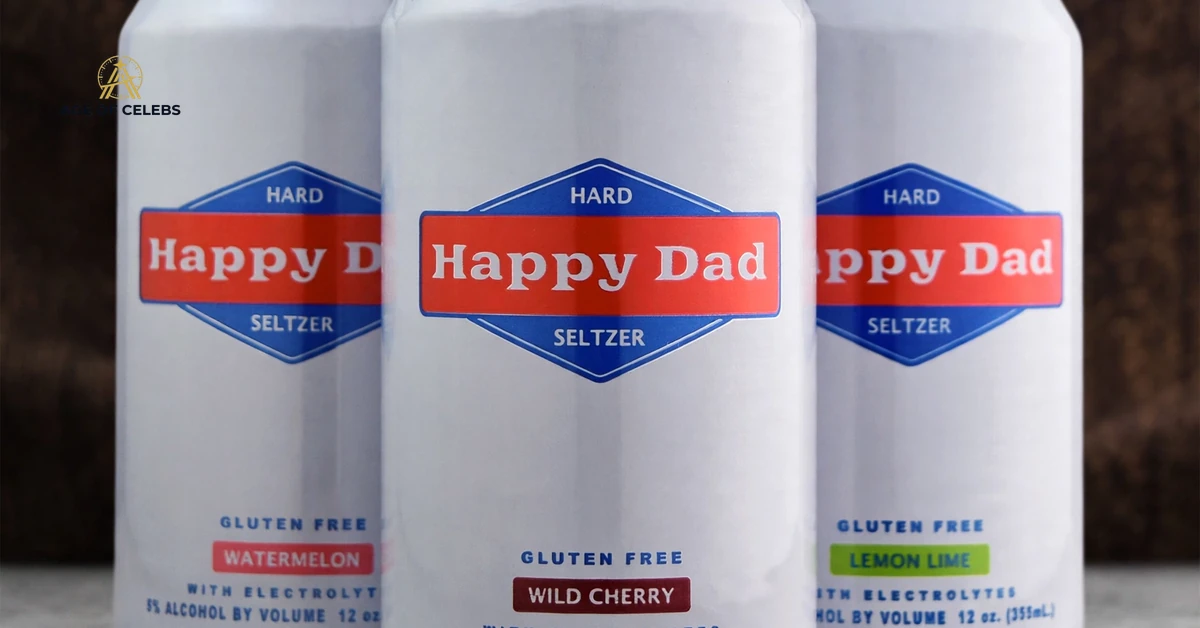
Let us clear up the biggest point of confusion first: Happy Dad is not a person; it is a hard seltzer brand, and that single fact changes how every number in this article should be read. The brand launched in June 2021 from Orange County, California, and it grew out of the NELK Boys audience rather than out of a traditional drinks company. Its founders are Kyle Forgeard, John Shahidi, and Sam Shahidi, with Sam Shahidi running the business day to day as chief executive. Happy Dad net worth therefore means the estimated value of the brand itself, not the personal fortune of one celebrity.
Happy Dad is best known for its 5% ABV hard seltzer in bold fruit flavors, its low-bubble style, and its meme-driven marketing. Its main income source is beverage sales through stores, bars, and distributors across the United States and Canada. Fans first met the cans through YouTube videos, podcasts, and live appearances, and that built-in audience gave the brand a head start that most new drinks never get. The sections below explain how old the brand is, who actually founded it, and what published estimates say about its value and revenue.
| Brand Name | Happy Dad |
| What It Is | Hard seltzer brand (also sells hard teas and hard lemonades) |
| Founded | June 2021 |
| Founders | Kyle Forgeard, John Shahidi, and Sam Shahidi |
| Chief Executive Officer | Sam Shahidi (runs day-to-day operations) |
| Headquarters | Orange County, California, United States |
| Industry | Alcoholic beverages, hard seltzer and ready-to-drink drinks |
| Core Product Strength | 5% ABV hard seltzer |
| Signature Style | Low carbonation, 100 calories per 12-ounce can, 1 gram of sugar, gluten-free |
| Estimated Brand Value | Roughly $250 million to $300 million in 2025–2026 estimates (unverified, privately held) |
| Estimated Annual Revenue | Roughly $80 million to $100 million in 2025 in some reports, with other reports putting it at $70 million to $100 million or more (estimates only, not audited figures) |
| Ownership | Privately held. Exact ownership percentages are not published. |
Happy Dad Age
Happy Dad is five years old as of October 2026. The brand launched in June 2021, which means it spent its fifth birthday in the summer of 2026 and is now moving through its sixth year in business. That age matters because it places the brand in an unusual spot. It is young enough to still feel like a startup, yet old enough to have survived the hardest test in its industry.
Most drinks brands need years to earn shelf space. Happy Dad skipped much of that slow climb because it arrived with an audience already attached. The NELK Boys had spent years building a loyal following on YouTube before the first can ever shipped. Retail buyers already knew the name. Fans already wanted the product. That shortcut explains why a five-year-old brand can sit in the same conversation as giants that have sold drinks for decades.
The timing also shaped the challenge. Happy Dad launched after the hard seltzer boom had already peaked. Brewbound reported that hard seltzer sales peaked around $4.1 billion in 2020 and then shrank by about $1 billion. A brand that launched in 2021 therefore never enjoyed the easy growth of the boom years. It had to win drinkers in a shrinking category, and that makes its survival and growth more impressive than a simple age number suggests.
Five years also gives the brand enough history to judge. Early novelty alone cannot carry a drink for half a decade. Repeat purchases matter. Distribution matters. Shelf space in new states matters. Happy Dad has now shown it can do more than launch loudly. It has expanded its range, moved its distribution network, and attracted outside investment, all of which are covered in detail below.
The Rise of Happy Dad
The story starts with content, not with a brewery pitch deck. Kyle Forgeard co-founded the NELK Boys, a Canadian-American creator group famous for pranks, parties, and the Full Send brand. John Shahidi and Sam Shahidi worked closely with the group on business and media ventures. Together they saw a simple opportunity. Their audience already bought Full Send merchandise in huge numbers. A drink that carried the same energy could sell in the same way.
The first product kept the formula deliberately simple. Each 12-ounce can held 100 calories, 2 grams of carbohydrates, and 1 gram of sugar. The drink was gluten-free. The alcohol came from a sugar brew rather than from fermented grain. Most importantly, the seltzer used lower carbonation than many rivals. Fans described it as easier to drink, and that easy-drinking character became part of the brand identity from the start.
Retailers noticed quickly. The NELK connection opened doors that a unknown startup would have found locked. Early coverage noted that the brand used the creator audience to win trial purchases, and then the liquid itself had to earn repeat purchases. That two-step pattern still defines the business. Fame brings the first can to a shopper’s hand. Taste and price bring that shopper back.
Expansion followed in stages. The seltzer range grew beyond the launch flavors. Hard teas arrived. Hard lemonades followed. Distribution spread across the United States, and the brand also built a strong position in Canada. Sam Shahidi later told Brewbound that the company treats North America as one business rather than treating Canada as an afterthought, and he said the brand performs exceptionally well there. That cross-border strength now forms a real part of its value.
The rise also mirrors a wider shift in the creator economy. Creators no longer settle for a sponsorship fee when they can own the product instead. Duke Dennis built a similar path in a different lane, turning gaming videos and livestreams into merchandise and group business ventures. Happy Dad applied the same logic to beverages. The audience became the distribution channel, and the product became the business.

Happy Dad Founders and Partners
A brand has no spouse, so this section covers founders and partners instead. That distinction matters for readers who arrive expecting a personal biography. Happy Dad has no husband or wife. It has three founders, one chief executive, and a circle of close associates who helped it grow.
Kyle Forgeard is the best-known founder to the public. He co-founded the NELK Boys and built the audience that launched the drink. His role gave Happy Dad instant cultural recognition. When he wore branded clothing in videos or appeared with a can in hand, millions of viewers saw the product without a single television commercial.
John Shahidi is the second founder. He and his brother Sam Shahidi brought media and business experience to the partnership. The Shahidi brothers had already worked around creator-led media, and they understood how to turn attention into a structured company. Their involvement gave the brand business discipline behind the loud public image.
Sam Shahidi serves as chief executive officer and runs day-to-day operations. Interviews with trade press consistently present him as the operational leader. He negotiates distribution deals. He sets sales targets. He speaks publicly about the brand’s ambitions, including its plan to challenge much larger rivals. Readers who want to understand where Happy Dad goes next should listen to Sam Shahidi first, because he is the founder most directly steering the company.
One name needs a clear correction here. SteveWillDoIt, whose real name is Stephen Deleonardis, is closely associated with the brand and promotes it heavily. He is not listed as a founder in official materials, and his exact stake in the company is unconfirmed. That distinction is important. Association and promotion are not the same as founding ownership, and this article does not treat them as the same thing.
Another correction protects readers from bad information. Travis Scott is not a founder of Happy Dad. Some low-quality websites invent celebrity founders to attract clicks, and that kind of claim should never be trusted without an official source. The verified founding team remains Forgeard and the Shahidi brothers, as reported by Brewbound and the brand’s own history.
The partnership structure also includes outside investors now. In 2025 the brand moved to the Beer Network for distribution and took venture capital investment from the Family Fund. That deal brought new money and new advisers into the business, but it did not change the founding story. The founders still lead the brand, and the new partners support distribution and growth rather than replacing the original team.
See Also: Duke Dennis Net Worth 2026: Age, Girlfriend & Fortune
How Happy Dad Markets Itself Without Traditional Advertising
Happy Dad barely behaves like a normal drinks company. It does not rely on television spots or glossy magazine campaigns. It relies on memes, limited drops, live appearances, and the constant presence of its founders and friends on social media. That approach costs far less than traditional advertising, and it reaches exactly the audience most likely to buy the drink.
Memes do much of the work. A funny clip travels further than a polished commercial, especially among younger drinkers. The brand leans into humor that fits the Full Send world. Fans share the jokes themselves, which means the marketing budget stretches further than a rival’s media buy. The risk is obvious too. Humor that works online can alienate mainstream shoppers, and controversial guests in NELK content have drawn criticism. The brand has responded by pushing the product itself to the front, so the can and the flavor matter more than any single video.
Limited drops create urgency. When a flavor or merchandise item appears for a short window, fans rush to buy before it disappears. That scarcity effect works well for a creator audience trained on merch drops. It also gives retailers a reason to promote the brand, because a limited release drives foot traffic into stores.
Live appearances close the loop. The founders and their circle show up at events, parties, and pop-ups where fans can meet them and try the drink. Those moments turn an online brand into a physical experience. A fan who tastes the seltzer at an event is far more likely to pick it up later at a grocery store.
Sam Shahidi told Brewbound that the brand has now grown beyond its creator roots. He described the typical Happy Dad consumer as a 38-year-old parent in the suburbs, not just a young fan watching YouTube videos. That shift is crucial. A brand that only sells to its founders’ followers has a ceiling. A brand that sells to suburban parents at a grocery store has a much larger future.
The creator-led model keeps spreading across the internet economy. Adin Ross turned livestreaming fame into major platform deals and merchandise, while Kai Cenat turned streaming success into a widely covered personal brand. Happy Dad follows the same playbook in beverages. The audience comes first, and the product gives that audience something real to buy.
Happy Dad Flavors and Products
The core range starts with hard seltzer at 5% ABV. Verified flavor names include fruit punch, lemon lime, pineapple, watermelon, wild cherry, grape, banana, and raspberry. Variety packs bundle several of these flavors together, which helps new drinkers find a favorite without committing to a full case of one taste. Retail listings confirm the same core flavors across major sellers, so shoppers should recognize the lineup in most stores.
Hard teas form the second pillar. Flavors include peach, lemon, blueberry, and half and half, alongside an original tea option. The teas keep the same 5% ABV and the same low-sugar approach. They appeal to drinkers who want something closer to iced tea than to sparkling fruit water.
Hard lemonades add a third lane. The brand’s official store lists lemonade products alongside seltzer and tea, including a stronger extra-hard lemonade option at higher alcohol strength. That expansion shows a company thinking beyond one product type. It wants to own more shelf space in the ready-to-drink aisle, not just one corner of it.
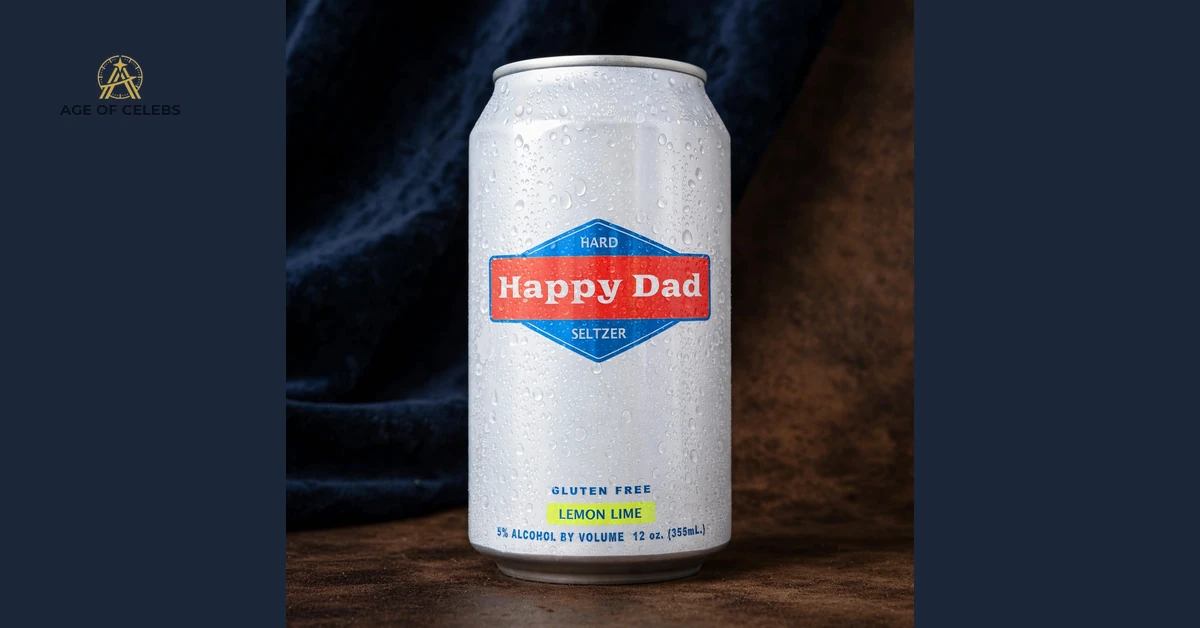
The nutritional pitch stays consistent across the range. A standard 12-ounce seltzer carries 100 calories, 1 gram of sugar, and no artificial sweeteners. The drink is gluten-free. Low carbonation remains a selling point, because many hard seltzers feel too fizzy for casual drinkers. Happy Dad positions itself as the smoother, easier option, and that positioning runs through its packaging, its flavors, and its marketing.
Flavor strategy also explains part of the brand’s staying power. Fruit punch and watermelon work as crowd-pleasing summer drinks. Lemon lime offers a crisp, familiar option for new buyers. Pineapple and wild cherry give the range a tropical and a classic fruit note. No single flavor has to carry the whole brand, because the variety pack lets the range sell as a team.

Where to Buy Happy Dad
Happy Dad sells through grocery stores, liquor stores, convenience stores, and bars across the United States, plus select locations in Canada. Major retail chains stock the variety packs and single-flavor cases, and the brand’s official website offers a store finder for shoppers who want to check local availability. Availability still varies by state and by store, because alcohol distribution in America runs through state-level systems rather than one national network.
Distribution changed significantly in 2025. Brewbound reported that Happy Dad moved from 76 wine and spirits distributors to 252 beer distributors through the Beer Network. Sam Shahidi said he negotiated more than 152 new distributor contracts to complete the move. That shift matters enormously for a drinks brand. Beer distributors reach grocery and convenience stores far more effectively than wine and spirits houses, and that reach directly affects sales.
The numbers from early 2025 showed the move already paying off in tracked channels. Brewbound cited Circana data showing Happy Dad as a top-25 beer vendor in food and grocery stores and in convenience stores. Off-premise dollar sales in grocery grew, and convenience volume grew even faster. Those figures cover only part of the market, but they point in the same direction. Distribution expansion and sales growth arrived together.
Canada deserves special attention. Shahidi told Brewbound that around 85% of Canadian sales run through government-owned retail stores, and that the brand holds the top-selling single-serve SKU in almost all provinces. That is a remarkable position for an American creator brand. It also reduces risk, because Canadian sales do not depend on one retailer or one region.
Happy Dad Net Worth
Now we reach the number most readers came for, and honesty matters more here than a single eye-catching figure. Happy Dad is privately held, so no audited valuation exists in public. No stock market price sets its worth each day. No annual report publishes exact profit. Every figure in this section is therefore an estimate, and readers should treat it that way.
Published estimates put the Happy Dad net worth, meaning the estimated brand value, at roughly $250 million to $300 million in 2025–2026 estimates. That range appears in multiple independent summaries of the brand’s worth. It reflects the value of the brand, its distribution network, its product range, and its future earnings potential, not cash sitting in a bank account. Brand value and cash are different things, and confusing them leads to wild misunderstandings.
Annual revenue estimates tell a related but separate story. Some reports put annual revenue at roughly $80 million to $100 million in 2025. Other reports put it at $70 million to $100 million or more. The honest way to present this is as a range with disagreement, not as one precise total. The reports agree on the scale. They disagree on the exact edge of the range, because private companies do not publish verified sales totals.
One data point helps anchor the revenue discussion. In 2025, the Family Fund investor Sean Kelly described Happy Dad as pacing toward $100 million or more in topline revenue for the year, as reported by Brewbound. That statement came from an investor with access to company information, which gives it more weight than a random blog estimate. It also fits neatly with the $80 million to $100 million range above, since a brand pacing toward $100 million could easily land inside that band.
Readers should ignore inflated figures from low-quality sites. Some pages claim a $500 million valuation without sourcing, and those claims do not match the more careful estimates from trade press and investor statements. This article deliberately does not use those unsourced figures. A smaller, sourced range beats a bigger, invented number every time.
What actually creates that $250 million to $300 million value? Four assets matter most. First, the brand name itself carries recognition that would cost a fortune to build from scratch. Second, the distribution network now reaches hundreds of beer distributors and thousands of stores. Third, the product range spans seltzer, tea, and lemonade, which spreads risk across categories. Fourth, the audience relationship still converts attention into sales at a lower marketing cost than traditional rivals face.
| Value Measure | Published Estimate | Confidence Level |
| Brand value / net worth | $250 million to $300 million (2025–2026) | Estimate only, privately held, no audited valuation |
| Annual revenue | $80 million to $100 million in 2025 (some reports) | Estimate only, supported by investor pacing comment |
| Annual revenue, wider range | $70 million to $100 million or more (other reports) | Estimate only, shows disagreement between sources |
| Investor pacing comment | $100 million or more topline in 2025 | Investor statement reported by Brewbound |
| Exact ownership percentages | Not published | Unknown, do not trust sites that invent splits |
The valuation also depends on what happens next. A brand growing inside a shrinking category earns a different multiple than a brand riding a boom. Happy Dad grew while the wider hard seltzer category shrank by about $1 billion from its peak, which suggests real brand strength rather than category luck. Investors pay for that kind of resilience, because it hints the brand can survive tougher conditions than its rivals.
Costs matter too, and they rarely appear in net worth headlines. Distribution deals cost money. Production, packaging, shipping, marketing, and staff all eat into revenue. A $100 million revenue brand does not keep $100 million as profit. Without audited accounts, nobody outside the company knows the true profit margin, so any article claiming an exact profit figure for Happy Dad is guessing.
For context, the founders’ personal wealth is a different question from the brand’s value. Kyle Forgeard, John Shahidi, and Sam Shahidi own stakes in a private company, and the value of those stakes depends on ownership percentages that are not public. Dividing a $250 million to $300 million brand value by three would be misleading, because ownership is rarely split evenly and outside investors now hold a share as well. This article therefore reports the brand value as a brand value, and it does not invent personal net worth figures for the founders from it.
Happy Dad vs Competitors
The hard seltzer shelf tells a brutal story. White Claw dominates the category with a share far above every rival. Truly holds second place but has lost substantial volume since its peak. Topo Chico Hard Seltzer brings the power of a famous mineral water brand. High Noon built a strong position with vodka-based seltzers. Happy Dad competes against all of them with a fraction of their corporate backing.
That competition explains Sam Shahidi’s public ambition. He told Brewbound that Happy Dad wanted to pass Topo Chico in sales first, then pass Truly, and then compete with White Claw by 2027. That is a bold ladder to climb in public, and it sets a clear test for the next two years. Readers can judge the brand against its own targets rather than against vague hype.
Happy Dad’s edge is cultural, not financial. White Claw and Truly spend enormous sums on traditional media. Happy Dad spends far less and reaches fans through content they already watch. That efficiency matters in a shrinking category, where every marketing dollar must work harder. A brand that can sell without a television budget keeps more margin on every case.
The weakness is scale. Corporate rivals own massive production capacity, national retail relationships, and deep advertising budgets. Happy Dad must prove it can keep growing once the novelty fades and once mainstream shoppers, not just fans, decide the purchase. The move to 252 beer distributors addresses that weakness directly, because distribution is the one asset that turns cultural buzz into everyday availability.
Product differences help too. Low carbonation sets Happy Dad apart on taste. The 100-calorie, 1-gram-sugar profile matches what health-conscious drinkers want. The tea and lemonade extensions give retailers more reasons to stock the brand. None of these advantages alone beats White Claw, but together they give Happy Dad a distinct shelf identity in a crowded aisle.
What Comes Next for Happy Dad
The next phase looks like a distribution war. Shahidi described a goal of winning every county in America, all 3,144 of them. That phrase sounds like marketing, but the underlying plan is concrete. More distributors mean more stores. More stores mean more trial purchases. More trial purchases mean more repeat buyers, which is the only growth that lasts.
The Family Fund investment supports that plan. Venture capital brings money, but it also brings advisers, retail contacts, and discipline around growth targets. The fund’s special purpose vehicle structure, reported by Brewbound alongside an SEC filing for more than $3.856 million, shows outside investors organizing specifically to back this brand. That kind of structured investment signals confidence, even if the filing amount covers only one vehicle rather than the whole investment.
Canada remains a growth engine. The brand already claims top single-serve positions across most provinces, and further Canadian expansion requires less new marketing than American expansion, because the audience already knows the product. A North American strategy, rather than a United States-only strategy, gives Happy Dad two markets to grow in at once.
New products will likely follow. The move from seltzer into tea and lemonade shows a team willing to extend the brand carefully. Future extensions could include more lemonade strengths, seasonal flavors, or new ready-to-drink formats. Each extension must protect the core promise, which is easy drinking, simple ingredients, and bold flavor. A confusing product range would hurt more than it helps.
The 2027 target against White Claw will test everything. Passing Topo Chico and then Truly requires sustained sales growth in a category that has shrunk. It also requires the brand to keep winning mainstream shoppers who never watched a NELK video. If Happy Dad meets those targets, the $250 million to $300 million valuation will look conservative. If growth stalls, the valuation debate will shift quickly, because private brand values fall as fast as they rise when momentum fades.
See Also: Kai Cenat Car Collection 2026: Million-Dollar Custom Garage
FAQs About Happy Dad
Is Happy Dad a person?
No. Happy Dad is a hard seltzer brand founded in June 2021. It is not a person, so it has no age in the human sense, no spouse, and no personal biography. Its age means five years since launch, and its founders and partners take the place of a personal life section.
Who founded Happy Dad?
Happy Dad was founded by Kyle Forgeard, John Shahidi, and Sam Shahidi. Sam Shahidi serves as chief executive officer and runs day-to-day operations. SteveWillDoIt promotes the brand closely but is not listed as a founder, and his exact stake is unconfirmed.
What is Happy Dad net worth in 2026?
Published estimates put the Happy Dad brand value at roughly $250 million to $300 million in 2025–2026. The company is privately held, so this is an estimate rather than an audited figure. Exact ownership percentages and exact financials are not published.
How much revenue does Happy Dad make?
Annual revenue estimates for 2025 range from roughly $70 million to $100 million or more, with some reports narrowing that to $80 million to $100 million. An investor described the brand as pacing toward $100 million or more in topline revenue in 2025, as reported by Brewbound. These are estimates, not audited sales totals.
What flavors does Happy Dad sell?
Core hard seltzer flavors include fruit punch, lemon lime, pineapple, watermelon, wild cherry, grape, banana, and raspberry. The brand also sells hard teas in flavors such as peach, lemon, blueberry, and half and half, plus hard lemonades.
Is Travis Scott a founder of Happy Dad?
No. Travis Scott is not a founder of Happy Dad. The verified founders are Kyle Forgeard, John Shahidi, and Sam Shahidi.
Where is Happy Dad headquartered?
Happy Dad is headquartered in Orange County, California. Its products sell across the United States and in select locations in Canada.
Conclusion
Happy Dad proves that a drinks brand can now grow from a phone screen instead of a boardroom. Five years after its June 2021 launch, the brand sells seltzer, tea, and lemonade across two countries, runs through hundreds of beer distributors, and carries an estimated value of roughly $250 million to $300 million. Annual revenue estimates of $70 million to $100 million or more show a real business behind the memes, not just a merch stunt with a can attached.
The honest caveats matter as much as the headline numbers. Happy Dad is privately held, so no audited valuation or exact revenue total exists in public. Ownership percentages stay private, and profit margins stay unknown. Readers should trust the sourced range and distrust any site that invents a precise figure or a celebrity founder. Trade reporting from Brewbound on Happy Dad’s distribution move and Family Fund investment gives the clearest public picture of the company’s ambitions, and the brand’s own store at the official Happy Dad website shows the current product range and flavors. Between those two sources, the story is clear. A creator audience launched this brand, but distribution, taste, and repeat purchases will decide how far it goes next.