
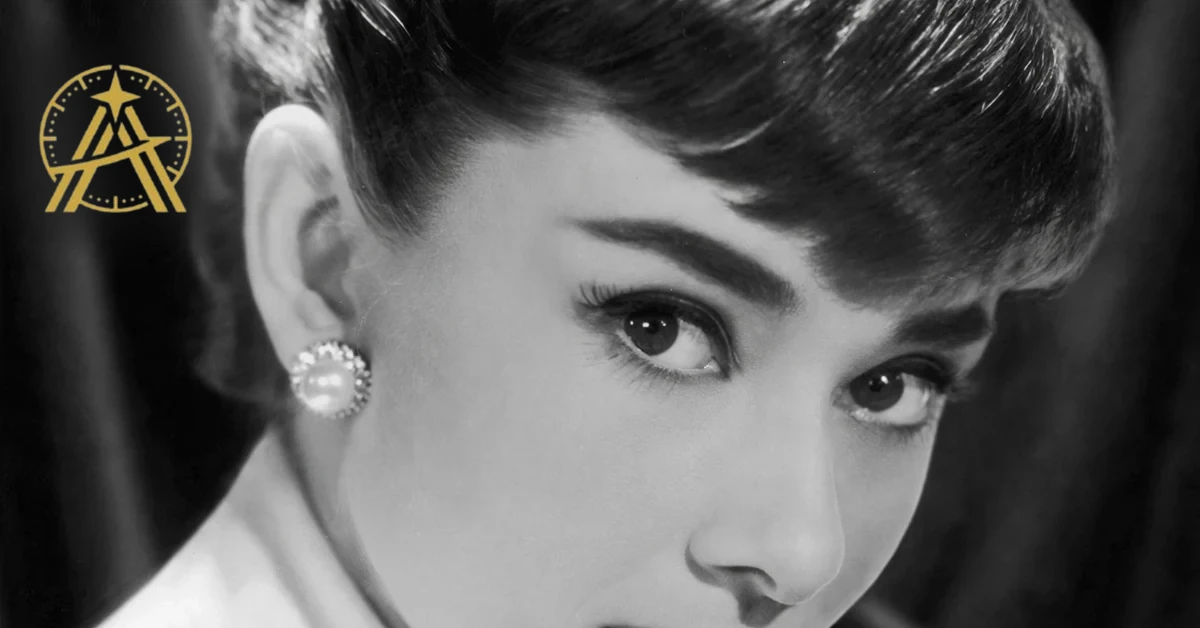
Some names sit so far apart in the cultural imagination that seeing them together feels like a typo. Audrey Hepburn, born Audrey Kathleen Ruston, was a British actress and humanitarian whose final home was a quiet village house in Tolochenaz, Switzerland. She became one of cinema’s eternal icons through Roman Holiday, Breakfast at Tiffany’s, and My Fair Lady, and she spent the last years of her life traveling the world as a UNICEF Goodwill Ambassador. Michael Phelps, born Michael Fred Phelps II, is an American former competitive swimmer who now lives in Scottsdale, Arizona. He is the most decorated Olympian of all time, and he converted his swimming fame into a business empire built on endorsements, investments, and public speaking.
This guide to Audrey Hepburn and Michael Phelps puts both legends side by side: their ages, families, careers, and net worth estimates, plus the honest answer to whether these two icons were ever connected. One built her fortune from the golden age of Hollywood and a licensing estate that still pays out decades after her death. The other built his from the most dominant Olympic run in history and the sponsor checks that followed. Together, they make a fascinating study in how greatness — and the money it brings — works in two completely different worlds.
Audrey Hepburn and Michael Phelps Profile Summary
| Detail | Audrey Hepburn | Michael Phelps |
|---|---|---|
| Full name | Audrey Kathleen Hepburn-Ruston (née Ruston) | Michael Fred Phelps II |
| Born | May 4, 1929 | June 30, 1985 |
| Birthplace | Ixelles, Brussels, Belgium | Baltimore, Maryland, USA |
| Residence | Tolochenaz, Switzerland (her final home) | Scottsdale, Arizona, USA (reportedly) |
| Profession | Actress, humanitarian | Former competitive swimmer, entrepreneur |
| Known for | Roman Holiday, Breakfast at Tiffany’s, My Fair Lady; UNICEF Goodwill Ambassador | 28 Olympic medals (23 gold); most decorated Olympian ever |
| Main income source | Film salaries; estate licensing after her death | Endorsements, investments, speaking |
| Spouse / partner | Mel Ferrer (1954–1968); Andrea Dotti (1969–1982); partner Robert Wolders (1980–1993) | Nicole Johnson (married 2016) |
| Children | 2 sons: Sean Hepburn Ferrer and Luca Dotti | 4 sons: Boomer, Beckett, Maverick, and Nico |
| Estimated net worth | ~$55 million at her death (Celebrity Net Worth estimate) | ~$100 million (Celebrity Net Worth estimate) |
| Status | Died January 20, 1993, aged 63 | Retired from competition (2016); active in business and advocacy |
Audrey Hepburn and Michael Phelps Age
Audrey Hepburn and Michael Phelps were born 56 years apart, and their ages tell two very different life stories. Hepburn was born on May 4, 1929, in Ixelles, a municipality of Brussels, Belgium. She died on January 20, 1993, at her home in Tolochenaz, Switzerland, after a battle with appendiceal cancer. She was 63 years old at the time of her death — a fact worth stating clearly, since her name still appears in modern entertainment news through exhibitions, licensing deals, and estate auctions, which can confuse readers into thinking she is still alive.
Michael Phelps was born on June 30, 1985, in Baltimore, Maryland. As of 2026, he is 41 years old. His competitive career already belongs to history — he swam his last Olympic race in Rio de Janeiro in August 2016, at age 31 — but he remains an active public figure through his foundation, business ventures, and broadcasting work. The age gap between the two is one reason their worlds never overlapped: when Hepburn died in early 1993, Phelps was a seven-year-old kid taking swimming lessons at the North Baltimore Aquatic Club.
Audrey Hepburn and Michael Phelps Spouses and Partners

Audrey Hepburn’s romantic life followed the contours of an old Hollywood biography — public, complicated, and closely tied to the eras she lived through. She married twice. Her first husband was actor Mel Ferrer, whom she wed in 1954 after meeting him while starring in the Broadway play Ondine. They had a son, Sean Hepburn Ferrer, born in 1960, and the marriage ended in divorce in 1968. A year later, Hepburn married Italian psychiatrist Andrea Dotti, with whom she had her second son, Luca Dotti, born in 1970. That marriage ended in divorce in 1982. From 1980 until her death in 1993, her companion was Dutch actor Robert Wolders, who was by her side through her UNICEF years and her final illness. She never married a third time, and Wolders remained devoted to her memory after she was gone.
Michael Phelps’s personal life has been far more settled, at least in its public telling. He married former Miss California USA Nicole Johnson in a private ceremony in 2016, the same year he retired from competitive swimming for the second and final time. The couple have four sons: Boomer Robert Phelps, Beckett Richard Phelps, Maverick Nicolas Phelps, and Nico Phelps. Where Hepburn’s family story was shaped by the pressures of mid-century fame and two divorces, Phelps’s has unfolded mostly out of the spotlight, with the family living a relatively private life in Arizona even as Phelps himself stayed visible as a mental health advocate and broadcaster.
Audrey Hepburn and Michael Phelps Net Worth

Net worth figures for both of these icons are estimates — no official, audited number exists for either — so treat every figure here as an informed approximation, not a bank statement. With that caveat, the numbers are still revealing.
Audrey Hepburn’s net worth at the time of her death was estimated at around $55 million, according to Celebrity Net Worth. That figure reflects a career in which she commanded some of the highest salaries of her era — she reportedly earned $350,000 for War and Peace, a fortune at the time, and $1 million for My Fair Lady in 1964, the equivalent of roughly $10 million today. After she stepped back from acting in the late 1960s, her income shifted toward occasional film roles, her UNICEF work (which was unpaid service, not a salary), and eventually the licensing of her name and likeness. Her estate has continued to generate significant money after her death: her sons Sean and Luca inherited the rights to her name, image, and film royalties, and a 2017 Christie’s auction of her personal belongings raised over $6 million, with her annotated Breakfast at Tiffany’s script alone selling for nearly $900,000. The uncertainty around the $55 million figure is real — estate valuations from 1993 involve Swiss and American probate, and much of the value sits in intangible licensing rights — but it remains the most widely cited estimate.
Michael Phelps’s net worth is estimated at around $100 million, also according to Celebrity Net Worth. Almost none of that came from the pool itself: across five Olympic Games, his official prize money totaled only about $640,000, a rounding error next to his fortune. The real money came from endorsements. At the peak of his career, Phelps was reportedly earning $10 to $12 million per year from brand deals with companies including Speedo, Under Armour, Visa, Omega, Subway, PowerBar, AT&T, and Colgate. His most famous single payday came after the 2008 Beijing Games, when Speedo handed him a $1 million bonus for winning eight gold medals — money he used to launch the Michael Phelps Foundation. Since retiring, he has added business investments, including a stake in the mental health platform Talkspace, and broadcasting work such as his swimming analyst role for NBC’s Paris 2024 Olympics coverage. For perspective on how another athlete converted sporting fame into an even larger fortune, see how Tiger Woods and Bill Ackman built wealth from opposite sides of the sports business.
Audrey Hepburn’s Legendary Career in Classic Hollywood
Before Audrey Hepburn was an icon, she was a ballet student who survived the Second World War in the occupied Netherlands. Born to a British banker father and a Dutch baroness mother, she spent her teenage years in Arnhem during the Nazi occupation, enduring the Dutch famine of 1944–45. She trained in ballet at the Arnhem Conservatory and later in London, but teachers told her she was too tall and too weakened by wartime malnutrition to become a prima ballerina. Acting became the backup plan that changed film history.
Her breakthrough arrived in 1953 with Roman Holiday, opposite Gregory Peck. At 24, Hepburn won the Academy Award for Best Actress for the role — and, in the same year, a Tony Award for the Broadway play Ondine, a feat almost no performer has matched. What followed was one of the great runs in Hollywood history: Sabrina (1954), Funny Face (1957), The Nun’s Story (1959), Breakfast at Tiffany’s (1961), Charade (1963), and My Fair Lady (1964). The American Film Institute later ranked her the third-greatest female screen legend of Hollywood’s golden age, and she eventually joined the tiny circle of EGOT winners — competitive Emmy, Grammy, Oscar, and Tony awards. Her mix of box-office charm and awards-season prestige set a template that later stars, from Natalie Portman to modern leading ladies like Kajal Aggarwal, would follow in their own eras.
After the late 1960s, Hepburn deliberately stepped away from full-time acting to raise her sons, appearing in only a handful of films over the next two decades. Her final act was not cinematic but humanitarian. Named a UNICEF Goodwill Ambassador in 1988, she traveled to Ethiopia, Bangladesh, Vietnam, Sudan, and more than a dozen other countries, visiting famine zones, vaccination projects, and children’s shelters. In December 1992, a month before her death, she received the Presidential Medal of Freedom, America’s highest civilian honor, for that work. Her film legacy made her immortal; her UNICEF work made her beloved.
Michael Phelps’s Olympic Legacy
If Audrey Hepburn’s greatness was measured in awards and screen time, Michael Phelps’s was measured in hundredths of a second. He began swimming at age seven, partly at his mother’s insistence and partly to burn off the energy of a kid diagnosed with ADHD. Under coach Bob Bowman at the North Baltimore Aquatic Club, he qualified for the 2000 Sydney Olympics at just 15 — the youngest American male swimmer to make an Olympic team in 68 years.
Then came the medal harvest that no one has matched. At the 2004 Athens Games, he won six gold and two bronze. At the 2008 Beijing Games, he won eight gold medals in a single Olympics, breaking Mark Spitz’s 1972 record of seven and becoming the defining athlete of those Games. He added four golds and two silvers at London 2012, briefly retired, returned, and closed his career at Rio 2016 with five more golds and a silver — 28 Olympic medals in total: 23 gold, 3 silver, 2 bronze. He also won 26 world championship golds and set 39 world records. Sports Illustrated named him Sportsman of the Year, and he is widely regarded as the greatest swimmer — and one of the greatest athletes — of all time.
Retirement gave Phelps a second mission. He has spoken openly about his struggles with depression and anxiety, particularly the dark period after the 2012 Games, and about his childhood ADHD. His message — “it’s OK to not be OK” — made him one of sport’s most prominent mental health advocates, a role he continues through the Michael Phelps Foundation’s wellness programming and his investment in the mental health company Talkspace. Where Hepburn used her fame to carry UNICEF’s message into war zones and famine regions, Phelps used his to tell athletes and fans that asking for help is not weakness. Different arenas, same instinct: fame as a tool for something bigger than yourself.
What Do Audrey Hepburn and Michael Phelps Have in Common?
On the surface, almost nothing. A British screen goddess of the 1950s and 60s and an American swimmer of the 2000s and 2010s share no era, no industry, and no documented personal connection.
But look past the obvious, and the parallels are striking.
Both were child prodigies of discipline. Hepburn’s ballet training under wartime deprivation gave her the poise that defined her screen presence; Phelps’s dawn practices under Bob Bowman’s famously drill-sergeant methods gave him the engine that defined his swimming. Both reached the absolute peak of fields where the difference between good and immortal is measured in millimeters of grace or hundredths of a second. Both became global cultural icons whose names traveled far beyond their industries — Hepburn as a fashion and elegance reference point, Phelps as the face of Olympic excellence. And both redirected their fame toward humanitarian causes: Hepburn with UNICEF, Phelps with water safety, healthy living, and mental health advocacy. Neither treated celebrity as the finish line. For both, it was the starting line for the work that actually mattered to them.
Frequently Asked Questions
Were Audrey Hepburn and Michael Phelps related?
No. There is no documented family connection between them. Hepburn was born in Belgium to a British-Dutch family in 1929; Phelps was born in Baltimore, Maryland, in 1985. Their pairing online is purely a comparison of two record-setting icons from different fields.
Did Audrey Hepburn and Michael Phelps ever meet?
No meeting between them is documented anywhere. Hepburn died in January 1993, when Phelps was seven years old and had not yet begun serious competitive swimming. Their careers belong to entirely different eras.
How old was Audrey Hepburn when she died?
She was 63. Audrey Hepburn was born on May 4, 1929, and died on January 20, 1993, at her home in Tolochenaz, Switzerland, after a battle with appendiceal cancer.
How many Olympic medals did Michael Phelps win?
28 in total — 23 gold, 3 silver, and 2 bronze — across five Olympic Games from Sydney 2000 to Rio 2016. That makes him the most decorated Olympian in history, a record no other athlete has come close to matching.
What was Audrey Hepburn’s net worth?
Celebrity Net Worth estimates her fortune at about $55 million at the time of her death in 1993. The figure is an estimate, not an official valuation — much of the value lay in her name, likeness, and film royalties, which her sons inherited and which continue to generate licensing income today.
What is Michael Phelps’s net worth?
Celebrity Net Worth estimates it at about $100 million. The bulk came from endorsement deals — reportedly $10 to $12 million per year at his peak — plus business investments and speaking engagements after his 2016 retirement, not from Olympic prize money, which totaled only about $640,000.
Why are Audrey Hepburn and Michael Phelps mentioned together?
Mostly as a comparison piece: two people who each reached the absolute summit of wildly different professions and then used their fame for humanitarian work. Search interest pairs them the way it pairs other unexpected icons — out of curiosity about how two very different kinds of greatness compare.
Conclusion
Audrey Hepburn and Michael Phelps never met, never corresponded, and worked in worlds that barely overlap — yet the comparison holds up. She turned wartime hardship into screen immortality and then into humanitarian service; he turned a hyperactive kid’s energy into 28 Olympic medals and then into mental health advocacy. Both proved that rare talent, aimed with discipline, can outlast the career that created it. For the full record on each, see Audrey Hepburn on Wikipedia and Michael Phelps on Wikipedia, plus the UNICEF page on Audrey Hepburn’s humanitarian work and the official Michael Phelps Foundation site.



Pingback: Chase Stokes Height, Age, Girlfriend & Net Worth