

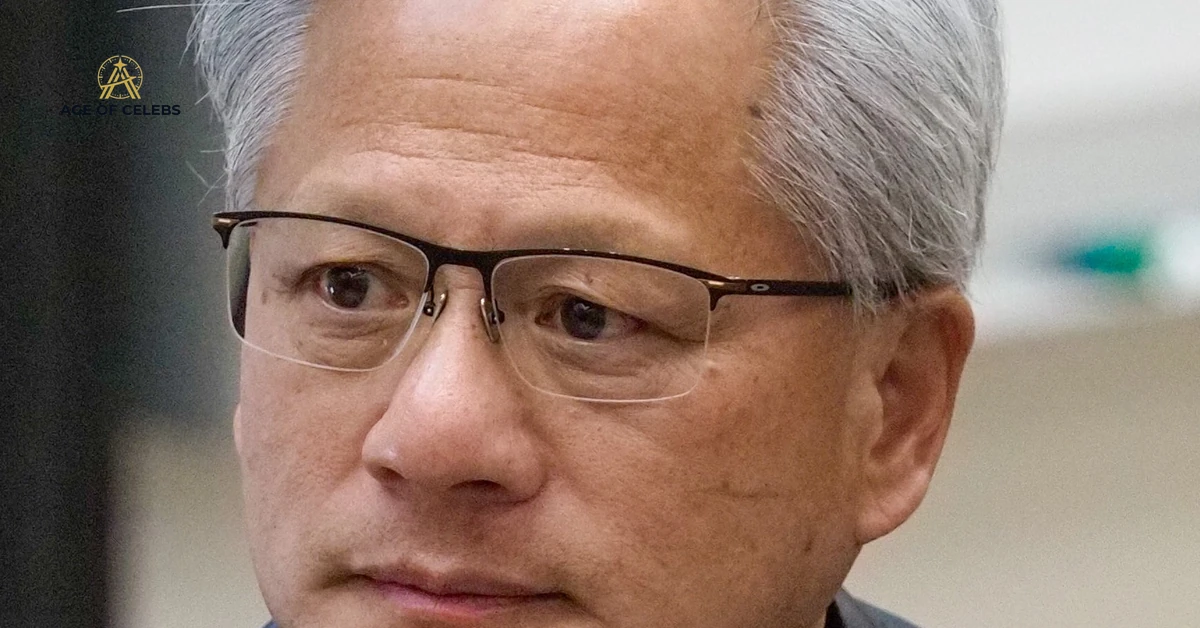
Dilip Shanghvi and Jensen Huang built billion-dollar empires from almost nothing, but they did it in completely different industries. Shanghvi, the quiet founder of Sun Pharmaceutical Industries, turned a small loan from his father into India’s largest drugmaker. Huang, the leather-jacketed co-founder of NVIDIA, turned a diner-table conversation into the chip company at the heart of the artificial intelligence boom. One man sells medicines that millions of people take every day, while the other sells the processors that train the AI systems reshaping work and science. This is a comparison, not a partnership, because the two men have no known joint venture and no shared business.
What links Dilip Shanghvi and Jensen Huang is the shape of their success, since both are self-made founders who stayed close to the companies they built and grew rich mainly from owning a large stake in one business. Shanghvi’s fortune comes from his family’s stake in Sun Pharma, and Huang’s comes from his roughly 3 percent stake in NVIDIA. If you searched for their names together, you probably want to know who is richer, how old each man is, who their wives are, and how two such different paths led to the same billionaire club. This article answers all of that, with every net worth figure labelled honestly as a dated estimate.
Dilip Shanghvi and Jensen Huang Profile Summary
The table below gives the fast facts first. The sections that follow fill in the stories behind them.
| Full Name | Dilip Shantilal Shanghvi |
| Born | 1 October 1955, Amreli, Gujarat, India |
| Age in 2026 | 71 (turned 71 on 1 October 2026) |
| Profession | Founder and Managing Director, Sun Pharmaceutical Industries |
| Best Known For | Building Sun Pharma into India’s largest pharmaceutical company |
| Main Income Source | Promoter-family stake in Sun Pharma, plus dividends |
| Spouse | Vibha Shanghvi |
| Children | Two: Aalok Shanghvi and Vidhi Shanghvi |
| Net Worth (estimate) | Roughly $24 billion to $29 billion in 2026, depending on the date and source |
| Full Name | Jen-Hsun “Jensen” Huang |
| Born | 17 February 1963, Taiwan |
| Age in 2026 | 63 |
| Profession | Co-founder, President and CEO, NVIDIA Corporation |
| Best Known For | Co-founding NVIDIA and leading it through the AI chip boom |
| Main Income Source | His roughly 3 percent to 3.4 percent stake in NVIDIA |
| Spouse | Lori Huang (née Mills) |
| Children | Two: Spencer Huang and Madison Huang |
| Net Worth (estimate) | Roughly $167 billion to over $200 billion during October to November 2026, depending on the date and source |
Dilip Shanghvi and Jensen Huang Age
Dilip Shanghvi was born on 1 October 1955 in Amreli, a small town in Gujarat, India. He turned 71 in October 2026. That makes him eight years older than Huang, and it also frames his story. Shanghvi started his company at 27, in an India very different from today’s startup scene. There was no venture capital queue for a young man selling psychiatric medicines from Vapi, Gujarat. There was a family wholesale drug business, a commerce degree, and a willingness to learn the trade from the ground up.
Jensen Huang was born on 17 February 1963 in Taiwan. He is 63 in 2026. His childhood crossed three places: Taiwan, Thailand, and then the United States, where his family moved when he was still a boy. He studied in Kentucky and Oregon, earned his electrical engineering degree from Oregon State University, and later completed a master’s degree at Stanford University. By the time he co-founded NVIDIA in 1993, he was 30 years old and already an experienced chip engineer, with spells at AMD and LSI Logic behind him.
The eight-year age gap matters less than the era gap. Shanghvi built his company in the 1980s and 1990s, when Indian drugmakers grew by mastering manufacturing, winning doctors’ trust, and expanding abroad one market at a time. Huang built his in the 1990s and 2000s, when computing power doubled again and again and a bet on graphics chips could, decades later, become a bet on all of artificial intelligence. Both men were young when they started. Neither was in a hurry to cash out.
Dilip Shanghvi and Jensen Huang Physical Appearance
Neither man is a celebrity in the usual sense, so verified body measurements are scarce. The table below gives only what published profiles report, and marks everything else plainly as not publicly known. Do not trust random fan pages that invent exact weights or chest sizes for businessmen. Those figures are not published by reliable sources.
| Feature | Dilip Shanghvi | Jensen Huang |
| Height | Not publicly known (unverified reports vary between about 5 feet 5 inches and 5 feet 7 inches) | Approximately 5 feet 7 inches (170 cm), as widely reported |
| Weight | Not publicly known | Not publicly known (unverified reports vary and are not reliable) |
| Chest | Not publicly known | Not publicly known |
| Waist | Not publicly known | Not publicly known |
| Hips | Not publicly known | Not publicly known |
| Body Type | Not publicly known | Not publicly known |
| Hair Color | Grey (greying, with a moustache) | Grey / silver |
| Eye Color | Dark brown | Dark brown |
| Distinctive Style | Low-key, formal business dress; famously avoids the spotlight | Signature black leather jacket at NVIDIA keynote events |
If you have seen Huang on stage, you already know his look. The leather jacket is not a costume for one event. It has become his trademark over years of product launches, and fans now expect it the way they expect a new chip announcement. Shanghvi is the opposite. He rarely gives interviews, rarely appears on panels, and built one of India’s biggest companies while staying out of the limelight. That contrast tells you a lot about the two men before you read a single balance sheet.
How Dilip Shanghvi Built Sun Pharma
Shanghvi grew up in a Gujarati Jain family and was raised in Kolkata, where his father ran a small wholesale business trading generic medicines. He studied at J. J. Ajmera High School in Kolkata and earned a Bachelor of Commerce degree from the University of Calcutta. He did not study medicine or pharmacy. He learned the drug trade by watching his father’s business and by paying close attention to what doctors prescribed and what patients could afford.
In 1983, he founded Sun Pharmaceutical Industries with a loan of about Rs. 10,000 from his father, roughly $200 at the time. He started narrow. The early focus was psychiatric medicines, a small corner of the market where a new company could build trust without fighting the biggest firms head-on. The first team was tiny, and the early years were about survival, quality, and relationships with doctors. That narrow start is the key to the whole story. Shanghvi did not try to sell everything at once. He proved himself in one area, then widened the range step by step.
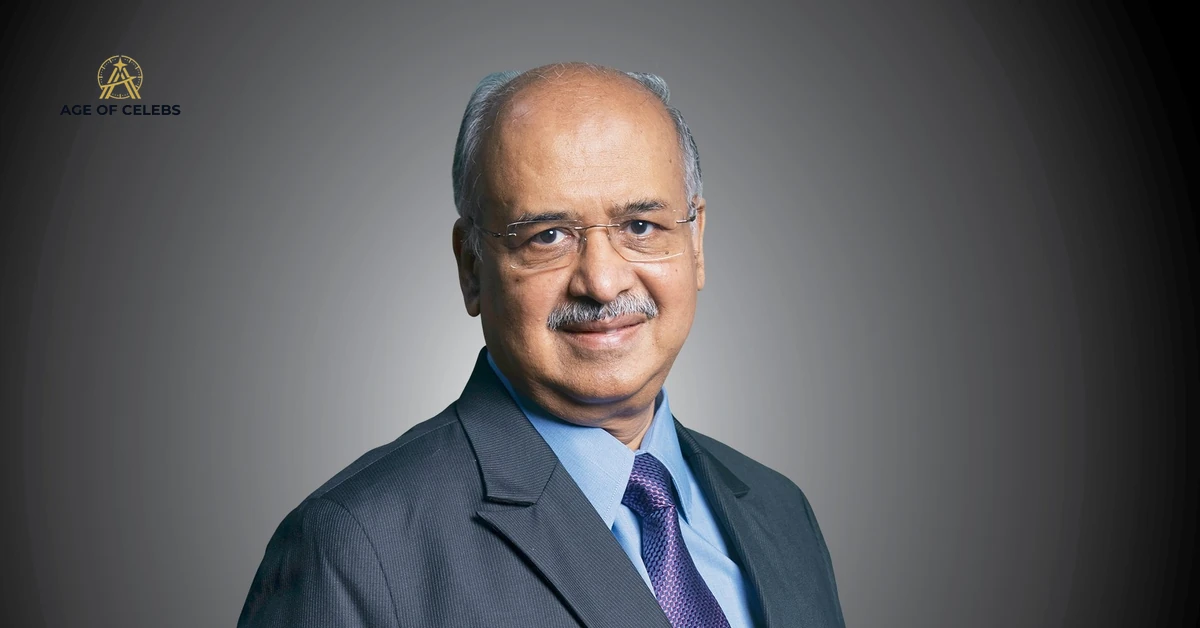
Growth came through a mix of steady product expansion and bold acquisitions. Sun Pharma went public in 1994. It expanded into the United States with the acquisition of Caraco Pharmaceutical Laboratories in 1997. Then came the deal that changed everything: the 2014 acquisition of Ranbaxy Laboratories for about $4 billion. Ranbaxy was troubled and tangled in regulatory problems in the United States, and many in the industry thought it was beyond saving. Shanghvi bought it anyway, fixed what he could, and turned Sun Pharma into India’s largest drugmaker and one of the world’s largest specialty pharmaceutical companies. Today, most of Sun Pharma’s revenue comes from outside India, and the company employs tens of thousands of people.
Along the way, India honoured him with the Padma Shri in 2016, one of the country’s highest civilian awards, for his contribution to trade and industry. Journalist Soma Das wrote his biography, The Reluctant Billionaire, published in 2019. The title fits. Shanghvi is famous among business readers precisely because he does not chase fame. He gives few interviews, keeps his family life private, and lets the company’s results do the talking.
How Jensen Huang Built NVIDIA
Huang’s path started on the other side of the world and in a different kind of engineering. After Oregon State and Stanford, he worked as a chip designer, learning how graphics processors were made and where the industry was heading. In April 1993, he co-founded NVIDIA with fellow engineers Chris Malachowsky and Curtis Priem. The founding story is now legend in Silicon Valley: the three men talked through the idea at a Denny’s restaurant in San Jose, California. Huang, who had once washed dishes at a Denny’s as a young worker, became the company’s president and CEO. He has held that job ever since, for more than three decades.
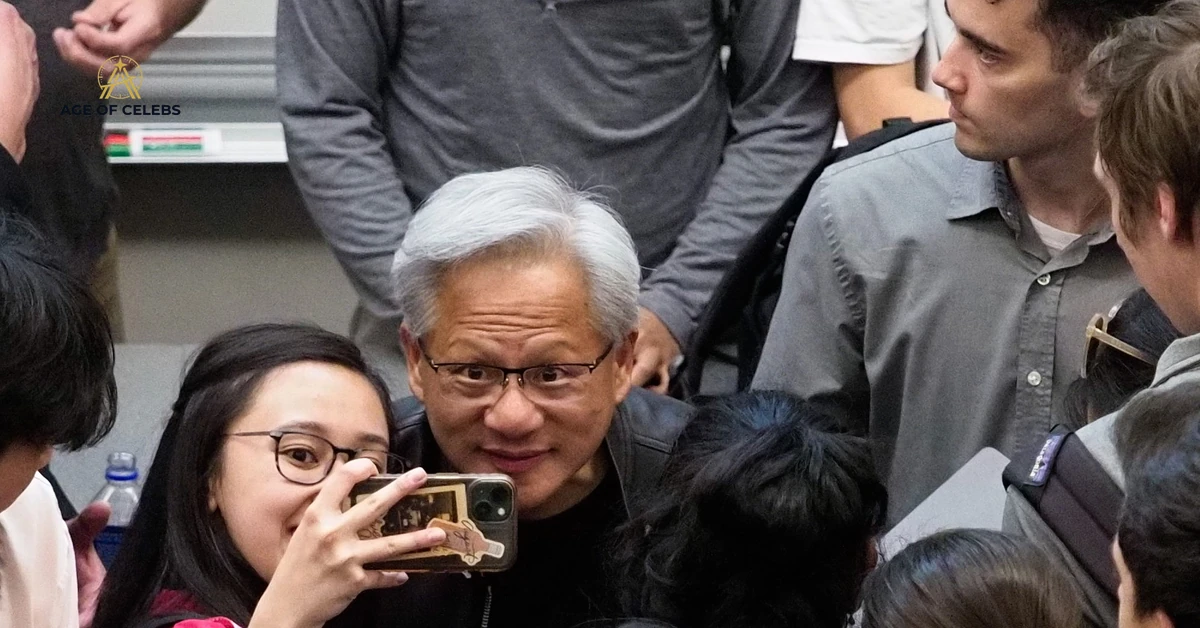
At first, NVIDIA made graphics chips for video games. Gamers wanted faster, prettier images, and NVIDIA delivered them. In 1999, the company introduced the GPU, the graphics processing unit, and went public the same year. That could have been the whole story: a successful gaming chip company. But Huang pushed a second idea that took years to pay off. He bet that the same chips that drew game worlds could also run heavy computing work, through a platform called CUDA. Researchers started using NVIDIA chips for science, and then, in the 2010s and 2020s, for training artificial intelligence models.
When the generative AI boom arrived, NVIDIA was already standing in the right place. Its chips powered the data centres that train large AI models, and demand surged. NVIDIA became the world’s most valuable public company, passing $4 trillion in market value in July 2025 and $5 trillion in October 2025. Huang’s fortune rose with the share price, because almost all of it sits in NVIDIA stock. In 2026, he received the IEEE Medal of Honor, one of technology’s highest career awards. He remains one of the most recognisable tech chiefs alive, not only for the chips but for the keynote stagecraft, the leather jacket, and the plain-spoken way he explains complex technology.
For a sense of how another founder-led fortune compares, read about Elon Musk’s net worth in 2026, where the wealth also tracks one volatile stock story. The pattern repeats across tech: the founder’s net worth is really a share price with a name attached.
Dilip Shanghvi and Jensen Huang Spouse and Family
Dilip Shanghvi is married to Vibha Shanghvi. The couple keep a very private life, and little is published about their wedding or their day-to-day family routine. What is public is the next generation. They have two children, Aalok Shanghvi and Vidhi Shanghvi, and both work in the family business orbit. Aalok holds a senior executive role at Sun Pharma and is widely seen as part of the company’s succession story. Vidhi has also worked with Sun Pharma group companies. The family guards its privacy closely, so this article does not speculate about their personal lives beyond what published profiles confirm.
Jensen Huang is married to Lori Huang, née Mills. The two met at Oregon State University, where Lori was his engineering lab partner. They married in 1985, according to Wikipedia’s profile, and have been together for four decades. They have two children, Spencer and Madison, who both work at NVIDIA. In 2007, the couple founded the Jen-Hsun and Lori Huang Foundation, seeded with NVIDIA stock then valued at about $300 million, supporting education, public health, and science and technology causes. Lori studied engineering but chose family and philanthropy over a corporate career, and the foundation is now one of the couple’s most visible joint projects.
The family contrast is gentle but real. The Shanghvis pass the business down inside a close, private Indian family company culture. The Huangs built a very American story: college sweethearts, two children who joined the family firm, and a large foundation carrying both their names. Neither family courts gossip. Both families are now part of the companies’ futures, whether through succession or through philanthropy.
See Also: Safra Catz and Diane von Furstenberg: Net Worth, Age, Husbands and Business Empires
Dilip Shanghvi and Jensen Huang Net Worth
Here is the honest answer first: nobody can give you one fixed number for either man. Both fortunes move with share prices every trading day. Any article that prints a single figure without a date is misleading you. The figures below are published estimates, dated, with the range shown when sources disagree.
Dilip Shanghvi Net Worth
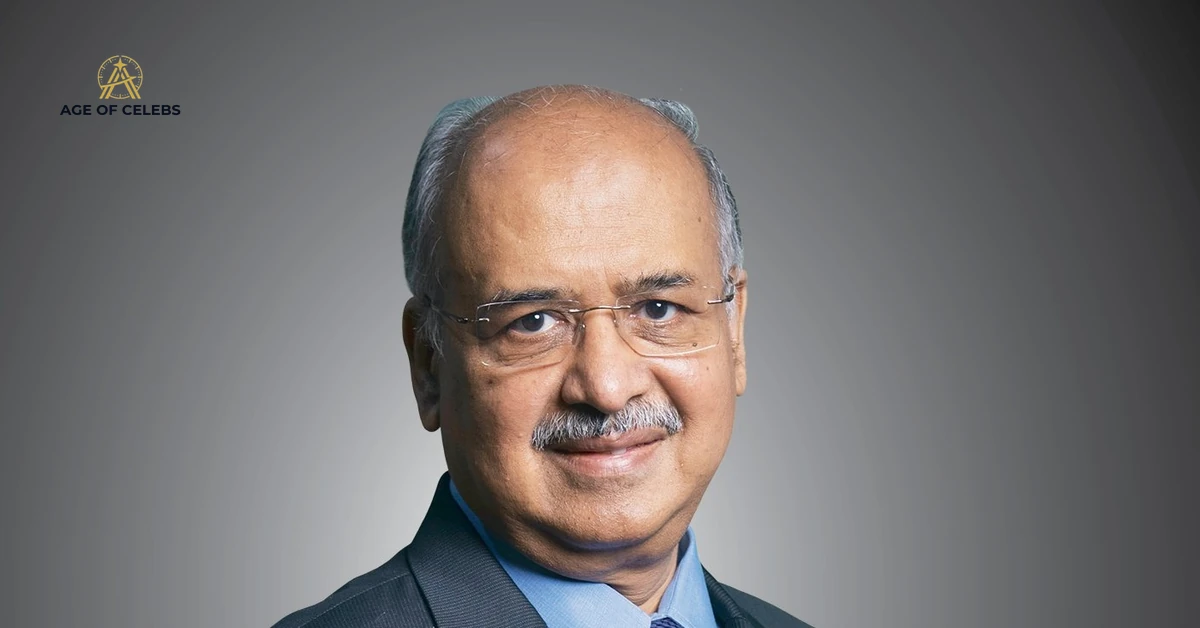
Forbes estimated Shanghvi’s net worth at $28.9 billion in May 2025, when he ranked as India’s fifth richest person. Through 2026, published Forbes figures have moved in a band of roughly $24 billion to $29 billion. The Forbes 2026 billionaires list placed him near $25.8 billion to $26.3 billion, and real-time trackers in late 2026 have put him near $24.9 billion. The spread is normal. Almost all of his wealth comes from the promoter family’s stake in Sun Pharma, held through vehicles such as Shanghvi Finance, plus dividends. When Sun Pharma’s share price rises, he gets richer on paper. When it falls, he gets poorer on paper. He does not draw a billionaire salary. The stake is the fortune.
Jensen Huang Net Worth
Jensen Huang’s net worth is far larger and far more volatile. Forbes estimated his fortune at over $200 billion in October 2026, after NVIDIA shares hit new highs. Reports of Forbes real-time estimates put him at about $204.5 billion on 2 October 2026, the first time he crossed $200 billion. By late October 2026, other trackers put him lower, with Forbes real-time near $177.5 billion after an October share-price fall and the Bloomberg index near $172 billion. A Forbes report dated 3 November 2026 estimated him at $187.1 billion, ranking him the world’s seventh richest person. The honest summary is a range: roughly $167 billion to over $200 billion across October and November 2026, depending on the day and the tracker.
Why does Huang’s fortune swing so much? Because he owns roughly 3 percent to 3.4 percent of NVIDIA, and NVIDIA is worth trillions. A small percentage move in a $5 trillion company is tens of billions of dollars. In 2020, his stake was worth roughly $4.7 billion. Six years later, it was worth more than forty times as much. That is the AI boom in one person’s bank balance, and it is also a warning. If NVIDIA’s share price fell sharply, his estimated fortune would fall just as fast.
| Measure | Dilip Shanghvi | Jensen Huang |
| Forbes estimate, May 2025 | $28.9 billion | Not the peak year; fortune rose sharply after |
| Forbes 2026 list / mid-2026 | About $25.8 billion to $26.3 billion | Crossed $200 billion in May and again in October 2026 |
| Late 2026 snapshots | About $24.9 billion (real-time tracker, late October 2026) | About $187.1 billion (Forbes report, 3 November 2026); $167 billion to $177.5 billion in other late-October trackers |
| Main asset | Sun Pharma promoter stake | NVIDIA shares, about 3 percent to 3.4 percent |
| Salary | Not publicly disclosed as a headline figure; wealth is equity, not salary | Not the main story; wealth is equity, not salary |
So who is richer? Huang, by a very wide margin. Even at the low end of his late-2026 range, his fortune is roughly seven times Shanghvi’s. Shanghvi remains one of India’s richest people and a top-100 global billionaire. Huang sits among the world’s top ten. The gap says less about talent than about industry scale. The global market for AI chips, at its peak, is simply larger and faster-moving than the market for generic and specialty medicines, even though medicines touch far more lives directly.
That gap also shows up in how each fortune is taxed and debated. In late 2026, Huang publicly backed a proposed California billionaire tax, saying he would welcome paying more, even though reports estimated it could cost him around $8 billion over five years. Shanghvi, by contrast, rarely enters public policy debates at all. One man argues in public. The other builds in private. Both approaches have worked for them.
Two Founders, Two Playbooks
Put their careers side by side and the differences sharpen. Shanghvi grew by acquisition. He bought companies, fixed them, and folded them into Sun Pharma’s manufacturing and distribution machine. The Ranbaxy deal is the classic example. It was risky, messy, and ultimately transformative. Huang grew by platform. He built one technology base, CUDA, and kept investing in it for years before the world caught up. The payoff took far longer, but when it came, it remade an entire industry.
Their starting capital tells the same story in miniature. Shanghvi began with about $200 borrowed from his father and no outside investors. Huang began with savings and, soon after, venture backing for a chip startup that needed serious money to design silicon. One founder bootstrapped in a family trade. The other raised capital in Silicon Valley. Both stayed in control of their companies for decades, which is rarer than it sounds. Most founders sell, step aside, or get pushed out. These two never left.
Their public profiles could hardly differ more. Shanghvi is so private that his biography is literally called The Reluctant Billionaire. Huang is a keynote star whose product launches draw crowds and headlines. Neither style is better. Shanghvi’s quiet approach suits a regulated industry where trust is built with doctors and regulators, not audiences. Huang’s showmanship suits a technology industry where developers and investors need to believe in a vision years before it pays.
There is also a useful lesson here for anyone comparing Miguel Patricio and Albert Bourla, two powerful business leaders shaping global industries, including Bourla’s pharmaceutical leadership at Pfizer. Pharma rewards patience, scale, and regulatory skill. Tech rewards platform bets and timing. Shanghvi and Huang each mastered the rules of their own game rather than copying the other’s.
See Also: Dave Calhoun and María Asunción Aramburuzabala Biography: Two Business Leaders Compared
Career Timeline: Dilip Shanghvi vs Jensen Huang
| Year | Dilip Shanghvi | Jensen Huang |
| 1955 / 1963 | Born in Amreli, Gujarat, India | Born in Taiwan |
| 1983 / 1984 | Founds Sun Pharmaceutical Industries | Graduates from Oregon State University; works as a chip engineer |
| 1993 / 1994 | Sun Pharma goes public (1994) | Co-founds NVIDIA (1993) |
| 1997 / 1999 | Acquires Caraco Pharma in the US | NVIDIA introduces the GPU and goes public |
| 2014 | Acquires Ranbaxy for about $4 billion | CUDA computing gains ground in research and AI |
| 2016 | Receives the Padma Shri | GPUs power the deep-learning boom |
| 2023 | Sun Pharma expands specialty and global business | NVIDIA rides the generative AI boom |
| 2025 | Son Aalok holds a senior executive role at Sun Pharma | NVIDIA passes $4 trillion, then $5 trillion in market value |
| 2026 | Continues as Sun Pharma’s founder and managing director | Receives the IEEE Medal of Honor; fortune crosses $200 billion |
What Makes Their Stories Different
- Industry foundation: Shanghvi built wealth in generic and specialty pharmaceuticals, where manufacturing scale and regulatory approval decide winners. Huang built wealth in semiconductors, where one platform shift can create a trillion-dollar company.
- Growth strategy: Sun Pharma grew mainly through disciplined acquisitions, above all Ranbaxy. NVIDIA grew through sustained investment in one platform, CUDA, that eventually redefined computing.
- Public visibility: Shanghvi keeps a notably low profile for a man of his wealth. Huang is one of the most recognisable tech executives alive, famous for his leather jacket and keynote showmanship.
- Succession: Shanghvi’s family succession is already visible, with his son in a senior Sun Pharma role. Huang, still leading NVIDIA at 63, has disclosed no formal succession plan.
- Wealth shape: Both fortunes are paper wealth tied to one stock. Shanghvi’s moves slowly with a drugmaker’s share price. Huang’s swings fast with a chipmaker at the centre of the AI cycle.
Readers sometimes ask whether the two men have ever worked together. There is no public record of a joint venture, a shared board role, or an official partnership between them. They operate in different industries, on different continents, with different customers. The comparison is interesting because their founder stories rhyme, not because their businesses overlap.
A similar two-founder comparison, Brian Roberts and Amy Hood’s biography, net worth, age, spouses and careers, shows how different leadership styles can still produce long, stable runs at the top of large companies. Longevity, in both cases, is the real achievement.
See Also: Josh Kesselman Net Worth: How the RAW Founder Built His Fortune
Frequently Asked Questions
How old is Dilip Shanghvi in 2026?
Born on 1 October 1955, Dilip Shanghvi is 71 for most of 2026. He turned 71 in October 2026.
How old is Jensen Huang in 2026?
Born on 17 February 1963, Jensen Huang is 63 throughout 2026. He turns 64 in February 2027.
Who is richer, Dilip Shanghvi or Jensen Huang?
Jensen Huang is far richer. His fortune ranged from roughly $167 billion to over $200 billion in late 2026 estimates, while Shanghvi’s ranged from roughly $24 billion to $29 billion. Huang’s wealth is roughly seven times larger.
What company did Dilip Shanghvi found?
He founded Sun Pharmaceutical Industries in 1983. It is now India’s largest pharmaceutical company and one of the world’s largest specialty drugmakers.
What company did Jensen Huang found?
He co-founded NVIDIA Corporation in 1993 with Chris Malachowsky and Curtis Priem. NVIDIA began in gaming graphics and now sits at the centre of global AI computing.
Is Jensen Huang married?
Yes. He is married to Lori Huang, whom he met as an engineering lab partner at Oregon State University. They married in 1985 and have two children.
Is Dilip Shanghvi married?
Yes. He is married to Vibha Shanghvi. They have two children, Aalok and Vidhi, who both work in the Sun Pharma business orbit.
What is Dilip Shanghvi’s most famous business deal?
The 2014 acquisition of Ranbaxy Laboratories for about $4 billion. It made Sun Pharma India’s largest drugmaker and remains the defining deal of his career.
Do Dilip Shanghvi and Jensen Huang work together?
No. There is no public record of a joint venture or partnership between them. The comparison rests on their similar founder journeys, not on any business link.
Conclusion
Dilip Shanghvi and Jensen Huang prove that there is no single formula for building a global business empire. One turned a small loan and a niche generics strategy into India’s leading pharmaceutical company through patience and disciplined dealmaking. The other turned a diner conversation and a bet on graphics chips into the engine room of the AI revolution. Their industries, personalities, and public profiles could hardly differ more, yet both stand today among the most consequential business leaders of their generation. One quietly reshapes healthcare access across emerging markets. The other visibly reshapes the technological future of the entire world.
If you want to check the facts behind this comparison, start with the two best sources: Dilip Shanghvi’s Wikipedia profile for his early life, Padma Shri honour, and family details, and Jensen Huang’s Wikipedia profile for his career, family, and honours. For live fortunes, remember that billionaire trackers move daily, so always check the date on any net worth figure before you quote it. Shanghvi’s story rewards the patient reader. Huang’s rewards the curious one. Together, they are a useful reminder that great companies are rarely built in a year, and almost never built alone in spirit, even when one founder’s name sits on the door.